Thursday, July 9, 2015
Arts Express: Factory Worker Noir, Struggle As Music In The Line Of Fire, A Tales Of Two Mothers
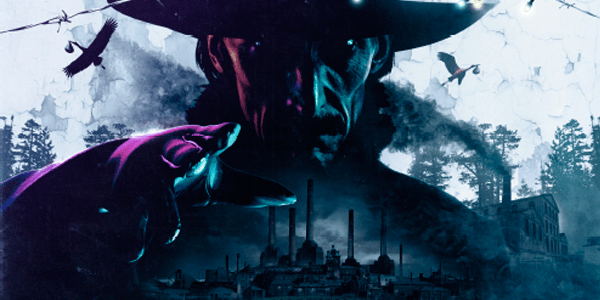
**Patch Town: Factory noir rears its head on screen, when it comes to corporate greed. Along with consumerism and the destructive pursuit of objects of materialistic desire. As the cabbage plant working stiffs in a bizarre turn of events in the course of this different sort of scary movie, have become the assembly line products themselves. And channeling The Shining, Time Bandits, Fritz Lang and Razorhead. Canadian filmmaker Craig Goodwill phones in.
**F Minor Signature Series: The Fighter. Vancouver composer, radio host and writer Paolo Pietropaolo is on the line to Arts Express, in this followup musical presentation. Combining a unique and fascinating storytelling and sound collage. In this selection from his F Minor series, he mines human emotion in connection with imagined musical states of mind. And in the case of The Fighter, his interpretation of rage as the driving force of struggle, 'in the line of fire, a bright flame in the darkness.'
LISTEN TO THE SHOW HERE
**Unexpected: A Tale Of Two Mothers. Writer/director Kris Swanberg, in a conversation about her own biopic. Drawing from her experience as an inner city Chicago high school teacher, and the simultaneous, sudden rocky road transition into expectant motherhood of both herself and her promising young African American student. And with a narrative collision course expressing conflicts surrounding race, class and socio-economic US divides, while avoiding with determination the usual white savior in the ghetto cliches on screen.
Arts Express: Airing on the WBAI/Pacifica National Radio Network and Affiliate Stations.
Monday, July 6, 2015
Dark Places: Conspiracy Theories Fueling Drama Or Betraying Gender?
Unconditional love may be a good thing when it comes to parental devotion for children and pets for humans. But with any other category, say gender, an unquestioning perspective may ferry you into, let's say, dark places. Which is exactly where author Gillian Flynn's screen adapted novel of the same name, along with her prior nutty nailbiter Gone Girl, takes you. Though far less ludicrous in that regard, is the dark place beneath the lid of pouting protagonist Charlize Theron's perpetually worn baseball cap, as moody metaphorical fashion statement about something or other.
Charlize stars as Libby Day in Dark Places, a childhood victim experiencing the slaughter of her farming family, in what came to be tagged notoriously as the Kansas Prairie Massacre. The traumatized girl then testified against her brother Ben, currently serving a life sentence in prison. And Libby has since morphed into a full time sullen slacker, living off victim donations and the proceeds of a memoir she never actually wrote, or even read.
Running low on funds eventually, Libby reluctantly agrees to join a persistent eccentric club dedicated to solving or re-investigating notorious crimes. And they believe her brother is innocent, with possibly suspicious evidence mounted against him decades ago. Hard up for cash, Libby embarks on a quest she doesn't believe in, but eventually begins to feel some of these mounting doubts have merit. Including in ways too ridiculous to bother discussing here, a farm foreclosure crisis precipitating a deranged plan involving annihilation concocted by her essentially clinically depressed mother (Christina Hendricks ) just prior to the massacre. And Chloe Grace Moretz doing unspeakable things as a pregnant psychopathic, devil worshipping bratty rich kid, don't ask.
Dark Places along with Gone Girl, mystifies mostly in terms of Flynn somewhat obsessively crafting such distasteful female characters. And then handing over for co-conspiratorial execution, so to speak, these stories peppered with unpleasant when not deplorable women precipitating the misfortunes of the men around them, to male filmmakers. Gilles Paquet-Brenner as director of Dark Places, and David Finch in the case of Gone Girl. And what may signify simply a misogynistic self-hating female at the narrative helm, lurking somewhere in the background recesses - simultaneous dark places as determinants of this dubiously driven story.
Prairie Miller
Sunday, July 5, 2015
Welcome To Leith: US Exceptionalism Come Home To Roost?
If you've ever been subjected to the frustrating experience of dealing with unpleasant next door neighbors or businesses on your block trampling all over quality of life notions, you're already aware of how insurmountable such a challenge tends to be. Then imagine an entire town faced with far worse.
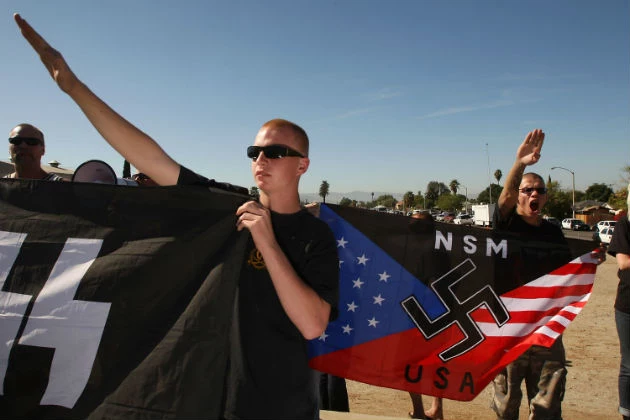
A rural North Dakota hamlet of merely three miles and a handful of families, Leith awoke one day to find itself the territorial victim of a horrifying invasion. And one rivaling any scary Hollywood horror movie, which is the subject of the ironically titled, gripping documentary, Michael Beach Nichols and Christopher K. Walker’s Welcome To Leith.
In fact, Leith had somehow become the master plan of notorious neo-Nazi leader Craig Cobb to take over the town - which would be a first for an established Nazi territory in this country - with the assortment of racist, white supremacist followers who would soon join him. And not with any of the usual anticipated violent terrorist takeover tactics in mind, but rather a shrewd scheme to utilize existing legal statutes on the books to acquire property and residency, and then simply vote themselves into power in local elections.
Though not without a few borderline legal maneuvers of local intimidation, to hopefully drive the lifelong residents out of the area. And perhaps enough provocation in the event that the enraged villagers would refuse to depart, to hopefully decimate their numbers by inciting them to illegal acts against their new neighbors that might lead to their incarceration. There's also more than a little help afforded to these vicious right wing intruders, by the fact that surrounding land being torn up by the destructive fracking corporations, would provide lucrative employment opportunities for these unwanted new neighbors.
The apparently too hot to handle by movie theaters Welcome To Leith manages a complex journey filmed impartially with a probing of both sides of the socio-political divide, through the legal and emotional struggles at hand. And grasping the never-a-dull-moment tense situation with a skillful blend of enlightenment and entertainment, however troubling.
Not to mention intimating a prophetic alarm as to what might lie ahead for this nation anywhere at any moment, as the deteriorating economic crisis and accompanying resentments ensue. Though one vital issue not addressed in the documentary, is how a country absent of any officially inscribed moral standards pertaining to cruelty, along with US exceptionalism legally come home to roost under the dubious blanket of civil liberties, kicks in.
Welcome To Leith has been acquired by First Run Features, and will be broadcast on PBS Independent Lens in the Spring 2016.
Prairie Miller
Saturday, July 4, 2015
Chloe And Theo: Dakota Johnson's Fifty Shades of Green?
A kind of big screen flaky fairy tale about environmental activism and global warming, Chloe And Theo is an unfortunate example of how good intentions can end up formulated in the worst ways. Not to mention underestimating the intelligence of the assumed idiotized movie audience to such a degree, that this film on sugar coating overload can be viewed as more about polluting minds than mother earth.
Presumably based on a true story about Theo Ikummaq, an Indigenous Canadian Arctic Inuit who sought the help of world leaders as his people have been observing with alarm the melting away of their frozen, once eternal 'cathedrals of ice' all around them, Theo apparently ended up in this Hollywood style yarn instead. And a narrative which never more than vaguely addresses the ecological issues presenting themselves, but veers into an offensive crime caper parody connected to poverty and racism. Black Lives Hardly Matter Alert.
Dakota Johnson, fresh from her critically denounced stint as the love interest of demented Wall Street honcho Christian Grey in Fifty Shades Of Grey, has moved on to masquerading here as scowling, duplicitous homeless hustler Chloe on the streets of Manhattan. How she ended up there and whether it may have anything to do with Grey dumping her for good in the perpetual Shades sequels to come, is anyone's guess in the absence of a credible back story.
In any case, Chloe soon crosses paths with Theo, who has journeyed to 'the people of the South' in order to hopefully seek help from their elders on behalf of his people concerning an 'angry sun' as 'my world is melting, please save our world from the sun.' But what eventually ensues is no less than two acts of threatened violence involving African American males confronting him, and all sorts of potential fraud at the hands of poor people, that indeed appears to upstage as a more often than not silly distraction, any environmental concern as the most imminent danger.
Which is not to say that the film is without its scattered moments of wit and solemn reflection. For instance elders in the 'South' unlike the wise and revered ones of his own culture, are discovered by Theo to his dismay as discarded and seemingly imprisoned inhabitants of bleak nursing homes. Or, the subtle but meaningful interludes of reflection, when Theo's quest is defined as 'purpose' in contrast to US society's emphasis on 'fun' as the ultimate human fulfillment.
Though an unfortunately telling episode, is when Chloe berates an upper class human rights lawyer, played by Mira Sorvino, who offers to help Theo have his message heard. As Chloe scolds her for being too rich to understand or relate to poverty and street people like her. An irony presenting itself which is so blatant and unreal, as these wealthy actors themselves impersonate the poor with such artificial posturing primarily telegraphing utter mockery.
So will we ever see the day when the actual workingclass is hired in movies to authentically play themselves? Just as whites historically mimicking people of color on screen was shunned long ago.
So the question remains, what does it actually mean to say a movie is going green, or is it just more of fifty shades of green gone Hollywood. Which in that case, is likely to refer more to the motivation of green growing in box offices, than in nature.
Prairie Miller
Friday, July 3, 2015
The Second Mother: A Younger Rebel Latina Generation Leads The Way
While class conflict is nothing new in movies, though more often than not the perpetual elephant in the room, rarely have stories explored class differences that can play out as well beyond the human family itself, in actual families. Which infuses the Brazilian social satire The Second Mother with fresh and flaky charm, when not an alternately brutal candor and a fiercely crafted narrative glow.
Written and directed by Anna Muylaert (The Year My Parents Went on Vacation, the bittersweet reverie of radicals-on-the-run from Brazil's former military dictatorship), The Second Mother presents the all too familiar predicament of workingclass women under capitalism. Who are forced by economic circumstances and the cruel absence of any social support system or safety net, to substantially abandon a nurturing and attentive role to their own children, in order for the family to economically survive by selling their labor on the indifferent marketplace. And in many cases, by assuming the role of surrogate mother to the children of an affluent family, as housekeeper.
In the case of The Second Mother, Val (Regina Case) is a middle aged provincial woman who left her daughter Jessica (Camila Mardila) in the care her estranged husband's new family far away a decade ago, in order find work as a live-in maid in Sao Paulo and send money back home to support her child. Jessica is now a high school graduate, and though long harboring bitter resentment towards her absentee mother, she sends word to Val that she will be arriving shortly to take college entrance exams in the city, and needs to live with her temporarily while doing so.
And though elated to see her daughter after so many years have passed, Val reluctantly agrees to this perceived imposition on her approving but imperiously condescending employer, Barbara (Karine Teles). Who though friendly to Val, can barely conceal her class disdain toward her hired help.
And when Jessica arrives and discovers to her disgust that despite her mother's sacrifices to support her and years of full time devotion to the demands of this other family, that Val has been rewarded for her services by being relegated to sleeping in a tiny airless basement room that she must now share with Jessica, let's just say the fun begins. Including Jessica defying all existing implicit class norms of absolute obedience, deference and deep seated divisions. As Jessica informs everyone that she prefers to eat at the family's table and sample their food instead, and stay in the unoccupied and far more elegant guest room rather than sleeping on the floor of her mother's horrendous cubicle.
And while her daughter's behavior and equal opportunity defiance initially render Val torn between her steadfast loyalty and alliance with this artificial family whose utterly socio-economic conditional affection is increasingly exposed, and yearning to mend a long broken relationship with Jessica, class consciousness does eventually crack those emotional barriers. Allowing a glowing light of liberation in metaphorical terms, to shine through.
And with Jessica representing an emerging, inspiring bold rebel youth rejecting the reactionary traditions thwarting the generations preceding them. And perhaps a new day for Brazil and a long oppressed and recently reinvigorated Latin America as well.
Prairie Miller
Friday, June 26, 2015
Arts Express: Kate Winslet Talks Equal Opportunity 17th Century Gardening
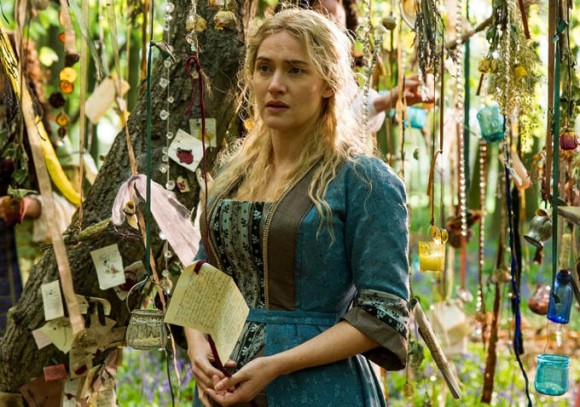
A Little Chaos: A conversation with actress Kate Winslet about her latest film channeling French feminism among 17th century royalty, as a determined equal opportunity gardener. While challenging as a character the 'dishonesty, synthetic world, pomp, posturing and ridiculous outfits' of that pretentious elite back then.
The Face Of An Angel: British director Michael Winterbottom phones in to Arts Express from Italy to talk about media madness today evoking Dante's dark wood in an existential wilderness, in his latest dramatic feature. Delving into nightmarish tabloid noir, and corporate media monsters as dark magical realism. Along with revisiting reflections on the legacy of his 2006 screen classic, The Road To Guantanamo.
Poetry Corner: Appalachian movement poet Michael Henson reads from his work. Conjuring the ravages of capitalism and consumerism, Noah's Ark, subways, and the devastating rural oxycodone epidemic in progress - 'an amalgam of Whitmanic vision and intensity.'
Art Corner: A listener guided tour of the National Academy Museum in New York City, and what visitors can discover there. Including images of seemingly spinning clocks, tunnels, the Ebola crisis, and the death of surfaces. Revealing other meanings and stories beneath the surface of things. Cynthia Parsons McDaniel reports.
Arts Express, Thursdays 2pm ET: Airing on WBAI Radio in NY 99.5 FM, and streaming live and archived everywhere at wbai.org.
Sunday, June 14, 2015
Sex, Lies And Hollywood: An Open Secret
**An Open Secret: Documentary exposes the child casting couch rampant in Hollywood, and director Amy Berg shunned by film festivals and struggling to find a distributor. A young victimized actor phones in from LA.
**Actress Kim Basinger phones in to Arts Express to talk global sex trafficking, motherhood mania, sexual violence, controversial conversation as a good thing, and extreme acting in her latest film, The 11th Hour.
LISTEN TO THE SHOW HERE
**Rape at Rikers and the legacy of black female bondage: A conversation with author and class action attorney Marlen Bodden, on behalf of women routinely sexually assaulted at the NYC prison.
Arts Express, Thursdays 2pm ET: Airing on WBAI Radio in NY 99.5 FM, and streaming live and archived everywhere at wbai.org.
Subscribe to:
Posts (Atom)