Friday, December 26, 2025

Mussolini: Son Of The Century Review - Spectator Surrealism On Steroids


"The old world is dying, and the new world struggles to be born: Now is the time of monsters..." ~ Antonio Gramsci, Prison Notebooks 

 In a ferociously conceived, back to the future insanely embellished cautionary tale, Joe Wright's simultaneously delirious and calculatingly crafted dramatic series based on Antonio Scurati's works and airing on Mubi, Mussolini: Son Of The Century  sidesteps traditional biopic and historical pageantry for something much more - and far less as well.

Reigniting the persona of the notorious Italian fascist dictator and his combo crafty and maniacal seizure of power, actor Luca Marinelli is nothing less than brilliant, terrifying, and somehow a dangerous and daffy buffoon as well. Add to that the early 20th century backdrop bathed in the period coarse brown and tinted hues of early photography back then, and the 'you are there' captive audience point of view - signaling a deliberately conceived hypnotic, repulsive and somehow involuntarily conspiratorial entertainment as well.

And in what will play out as repeated inescapable audience complicity in the ensuing political horrors playing out historically, Mussolini tears through the fourth wall continually to proclaim, once with an in your face scary, seductive lure, 'Follow me - you'll become fascists too.' And like the masses who could not resist his hypnotic charisma, you've become one of them as well, out of spectator on steroids irresistible curiosity's thirst for more. Not to mention, could Mussolini, and Hitler as well, have been inflicted by PTSD maniacal rage and resentment - both wounded in WWI.

But while the mastery of this production is undeniable, conceptual issues loom - and not just related to how the potent dramatic momentum is inevitably diluted by artificially thinning out the repetitive content over the prescribed eight hour series. That narrative padding could have been infused with, say, the actual, tremendously revealing background history of the time - and that flows, not through arbitrary timelines defining the artificially imposed beginning to end style of Hollywood storytelling, but the endless momentum reality of world events. 

And what could have been that driving force giving rise to both that traumatic period in Italy along with the impact on Mussolini in seizing that moment opportunistically - the Russian Revolution. Signifying the influence of that revolution on the subsequent imploding uprisings. Though to grab that powerful moment as his own rather than as an ideological follower, Mussolini chose fascism instead, manipulating those WWI physically and mentally destroyed, bitter veterans with an illusion of power that ironically only he held over their rage, directed to his advantage. Along with the powerful capitalist class, in need of the antidote he can provide to potential social upheaval threatening their existence.

And an offscreen irony never acknowledged in Son Of The Century, the communists who in the end brought the historical proceedings full circle when publicly hanging the executed fascist leader upside down - a significance intimating that presence of that other son of the century surviving elsewhere to this day - Lenin. Though in a further irony, a brewing communist revolution suppressed, not by the fascists, but by the arriving American troops in Italy.

Prairie Miller


Thursday, December 11, 2025

We Shall Not Be Moved - Sedentary Cinema At The Oscars

 We Shall Not Be Moved - Sedentary Cinema At The Oscars


Don't expect the usual demeaning caricatures sidelining female elders in this deplorable Mexican international Oscar entry this year, when not monsters on the menu of horror fare. In fact far worse, at least when it comes to that other usual 'out of context cinema' bypassing history in progress all around it.

For starters, the misleading title, whether intentional or not - an insult to the historic US Civil Rights Movement anthem. In other words, in a case of detrimental double meaning, dismissing both popular struggle and the honoring of those who sacrificed enabling those causes as a kind of psychological impairment - embracing collective sedentary amnesia as the path forward instead.

Symbolizing and central to this drama's cynical historical hypothesis, is Socorro (Luisa Huertas), a seemingly senile alcoholic, chain smoking Mexican lawyer. The bitter, bedraggled Socorro is portrayed as psychotically obsessed with finding and murdering the unindicted officer who tortured to death her brother nearly six decades ago during the 1968 student uprising culminating in the Tlatelolco Massacre. And though her family is dismissive of what is portrayed as a toxic mix of geriatric fantasy and dementia, Socorro proceeds on her determined mission. This while soliciting the assistance of local hitmen, when not staging a homicidal dress rehearsal murdering a neighbor's cat. And the rest is history - or rather, not.

Much more a reflection of perhaps pessimistic and derisive younger generations today, the film sets itself squarely, when it comes to the real world all around them, a flinching Mexico bowing beneath the bullying, increasingly imposing threats of the US that began with renaming the Gulf Of Mexico. And which has progressed to internal signaling of that potential invasion of the country, under the pretext of wiping out their neighbor's domestic criminal activity - along with the simultaneous encroaching US occupation of the entire Caribbean with their massive military fleet, and engaged in assassinating alleged fishing boat suspects in the surrounding waters. 

Thus signaling a not unrelated allegory of a film promoting historical passivity and amnesia as the cure, culminating in a cynically rehabilitated Socorro ultimately breaking with the past in creating a funeral pyre out of a symbolic photo of both criminal perpetrators and victims. And likely palatable simultaneously to US movie audiences - that is, the Oscars...

Prairie Miller


Tuesday, August 26, 2025

 LILLY

"Diving into the glut of superhero-saturated cinema, a workplace feminist slips in...


https://wbai.org/upcoming-program/?id=11944

Thursday, March 17, 2022

Alice: Critical Race Theory On Steroids


 This time travel, back to the future critical race theory on steroids rebel road movie shakes up that classic looking glass, with sixties uprising blaxploitation fury -  while exhuming the buried history of slavery in this relentlessly self-congratulatory country. And the best action hero so far this year. In other words, Right On.

 As Keke Palmer in a phenomenal portrayal of the designated ultimately rebel slave, traverses centuries back and forth in an uncharted but enlightening quest. And to figure it all out on the way to correcting on her terms, the shameful, unrecognized and unresolved history of slavery and racist  brutality in America.

 And while executive producer Common has not only assembled a hypnotic soundtrack composed along with Patrick Warren, Karrien Riggins, Isaiah Sharkey and Burniss Travis - but steps side and concedes to a female co-star as the main attraction for a change. Along with portraying as a Georgia trucker and flawed guiding light for Alice through the seventies political racial turmoil, again rare on screen, a mutually evolving platonic relationship. Basically Common - just keeps on truckin'.
 
African American director Krystin Ver Linden displays a deep dive youthful vigor and energy taking narratively brave chances on multiple time travel excursions - ultimately connecting slave horrors back then to working class oppression today. And seemingly following her own delivered manifesto instructing in the film herself: 'Doing the right thing is never wrong.'
 
While as valiant postscript, Alice is 'Dedicated to the African Americans who remained enslaved during the Twentieth Century, and to those who remain oppressed world-wide."
 
Prairie Miller


Thursday, November 25, 2021

The Unforgivable: Sandra Bullock Surviving Brutal System - And Cop-out Story

 https://cdn.pastemagazine.com/www/articles/2021/10/26/the-unforgivable-header.jpg

                         Bullock Goes Full Mao In The Movie              
 
...In the US with its shameful history as the most mass incarcerated country in the world, just hand the Oscar to Bullock for her ex-con's defiant, devastating performance...

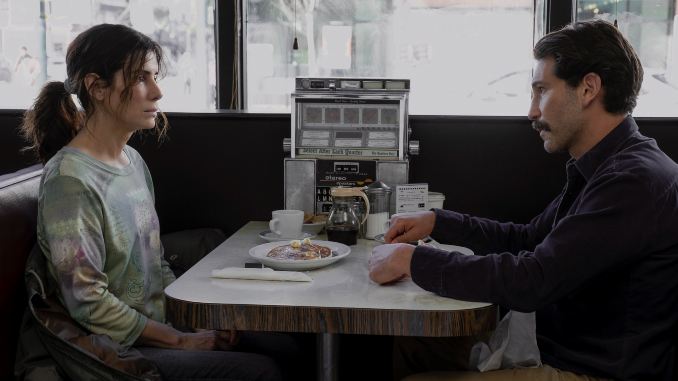
Though The Unforgivable may disappoint the mostly male movie critics out there for Sandra Bullock bypassing the usual flirty, sexually degrading roles women are subjected to on screen, her raw and real, stinging performance as a socially and emotionally battered ex-con resonates as a metaphorically take no prisoners performance. This, despite the fact that Bullock and Nora Fingscheidt, a director fiercely committed to her craft, seem to both be struggling against a metaphorically cop-out script that first challenges then cowardly concedes to the cruelty of the existing system.

Bullock commands the proceedings as Ruth, a Seattle woman just released from prison after twenty years behind bars for killing a cop. What led to the incident, was the eviction being staged against Ruth and her young sister Katy, who finding themselves without parents, can no longer pay for the expenses to keep the home. When the sheriff breaks down the door, he is blown away and Katy vanishes into the adoption system. 

And upon Ruth's release, she struggles as both an emotionally broken but fiercely determined woman, to locate her sister - while enduring post-incarceration life as a cop killer pariah just trying to endure and find work. And in remarkable scenes where the dead end brutality of working class existence, whether a slum hotel or fish factory, intertwine with her own. And in no small part signaling the skills of the director, gifted with a keen sense of Italian neo-realism and her own roots in the social realism of the GDR where she was born, in crafting this doomed landscape.

But where the script takes a cowardly detour, is in blinding the reality of the here and now - the mass evictions in a declining economic system, and Seattle as one of the western epicenters revolting against police brutality, poverty and political repression. And if the screenwriters had actually had the courage of conviction to be in tune to what's going down in the real world today rather than opting for the increasingly anachronistic family values Hollywood happy ending, Bullock going full Mao in The Unforgivable would have signified a far more complex dramatic mission than just reuniting a family.
 
Prairie Miller

Saturday, October 9, 2021

The Manor: One Flew Over The Cuckoo's Nest - Or Maybe Not

 Barbara Hershey and Nicholas Alexander Interview: The Manor


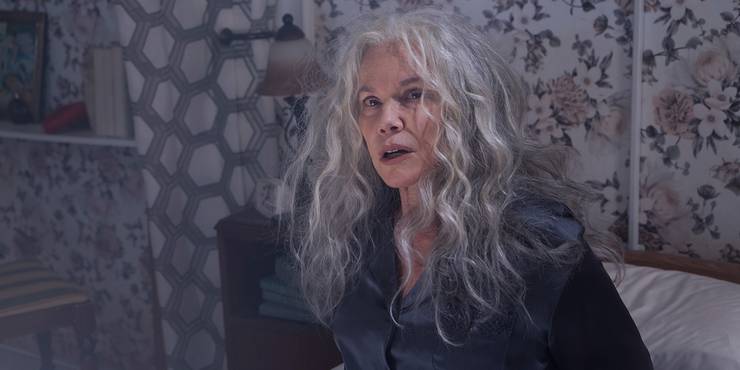
Barbara Hershey turns up in The Manor somewhat as feisty and subversive as her youthful persona in Boxcar Bertha nearly a century ago - a seventy year old reluctantly confined by her family to the nursing home in question, following a mild stroke. Increasingly convinced that there's something sinister going on way beyond just over-medicating the residents to shut them up and keep them docile and compliant, the instinctive rebel in Judith is on the case. Or is she? 

 And that's where this chilling forensic elder care home scrutiny, dubbed here as 'death row' takes a sudden, unpredictable turn into a different sort of horror spree - touching on life under capitalism. And that masterful storyteller, writer/director Axelle Carolyn who originally hails from Brussels, would appear to infuse this gothically shrouded narrative with a lot more than European cinematic sensibility. Say, the increasingly dark descent of US society into economic and psychological decline and desperation.
 
As for Judith's rebel instincts in a confrontation with her fascist leaning, progressively freaky surroundings - though Barbara Hershey in this instance is ultimately no Jack Nicholson, there seems to be a refreshing trend in movies lately, of elderly female action heroes. Last year, for instance, Dianne Wiest stood up as a defiant victim of retirement home physical and emotional abuse along with financial exploitation, in 'I Care A Lot' - while Cicely Tyson, who just passed away earlier this year, risks her life as spunky whistleblower in her nineties, exposing a criminal enterprise holding the elderly hostage tied up in a basement for their monthly social security checks, in Tyler Perry's A Fall From Grace. 
 
And getting back to The Manor, though some reactions may range from bewilderment to disappointment regarding Judith's ultimate behavior - and without giving too much away - let's just say that under capitalism, it's inevitably a given that enriching oneself is to the expendable, comparable detriment of others in US society. And which may be said to lend significant, ironically realistic if brutal existential weight, to this otherwise fantasy horror tale.
 
Prairie Miller


Friday, September 3, 2021

Karen: The Karens Doth Protest Too Much, Methinks

 PiaGlenn on Twitter: "So it's real. Written and directed by an individual  named Damon "Coke" Daniels. He goes by Coke; as one would. His imdb credits  read like Michael Che jokes… https://t.co/zROhyp4ld0"

Karen- Who Is She, What Is She Up To, And Why. So what compelled African American filmmaker Coke Daniels to make this movie on the Karen racist phenomenon - starring Orange Is The New Black's Taryn Manning as the Karen in question, and civil rights George Floyd family attorney Ben Crump turning up on screen too. 

Though a Karen movie is long overdue, it's by no means a recent ugly phenomenon - and really as old as this country itself. Whether precipitating the countless slave and Jim Crow lynchings or some of the most glaring reported cases of Emmett Till and the Tulsa Massacre with connections to the particular phenomenon of white female racism, it's about time to say the least. And though critics out there are not at all happy with this particular Atlanta Karen created by Daniels, their motivations may be either bossy backseat driver tendencies to have not made a movie their way - or methinks the Karens doth protest too much. 

Or perhaps it's considered a violation of the unspoken demand when it comes to placating liberal guilt at the movies, that an emotional rather than political catharsis is required for a stamp of approval on any film about what is always the controversial topic of racism. So were they dismayed at not encountering to their liking a documentary or a weepie instead. Though admittedly, that fast forward happy ending seemed in too much of a rush to cut narrative corners. 

In any case, props to Daniels, in reviving the subversive, irreverent blaxploitation genre - while continuing the emerging Black Renaissance in film to make movies their way, in its challenge to that entrenched cultural apartheid in Hollywood and beyond. Not to mention the reference in the movie to the covert blue brotherhood of cops because yes, the police force in this country originated in plantation slave patrols to hunt down runaway slaves.

Stop Kidding Yourself: The Police Were Created to Control Working Class and  Poor People – LAWCHA

Said Daniels in my conversation with the filmmaker: "My film is for other communities to just feel, you know, the pain and anguish of what black people go through in this country on a regular basis. And this is just putting a band aid on a bullet wound. But I would just hope that showing my film in this light will maybe put the mirror to some of the Karen types of behavior in people's faces, to say hey - this is ugly what we do..." 

Oh, and by the way, regarding one critic mocking the inclusion of 'a wailing trumpeter for some reason' - hey, a little research never hurt any review. That 'wailing trumpeter for some reason' happens to be renowned Grammy Award winning jazz musician Keyon Harrold Sr., a victim along with his young son of Soho Karen in NYC, and who likewise similarly performed in a protest gathering following that horrendous incident. 

Prairie Miller

Friday, June 25, 2021

Mama Weed: Shopping As The New Female Weapon Of Choice Scene Of The Crime Scenario

Mama Weed: Shopping As The New Female Insurrection Scene Of The Crime On Screen

 Huppert's 'arresting' charisma rules in this daring Economic Crisis Cinema gem. Flaunting a subversive female-centric literally undercover fashion statement superhero shopping spree, as the new weapon of choice scene of the crime scenario on screen.

Originally titled The Godmother and adapted from the Hannelore Cayre novel of the same name, Mama Weed excels irreverently as a daring Isabelle Huppert astonishes and delights with a take no prisoners takeover in this feminist comic noir with a raw rebel heart. Huppert as Patience Portefeux is anything but, a financially struggling older woman - a mother, widow and low wage worker as an Arabic wiretapping translator for an undercover narco squad at a Paris precinct. And with her knowledge of the language owing to her origins as the daughter of an Algerian immigrant father who married her French mother - now likewise widowed and confined to a nursing home.

Running out of economic options with dual looming evictions from her apartment, as well as her mother's nursing home that she can't afford, Patience by chance encounters a highly unusual opportunity that materializes for this female breaking bad girl in progress, when she translates for the undercover squad a pending big bust of imported hash - and whose driver is the son of the devoted immigrant attendant caring for her mother at the nursing home. Dabbling in an identity theft fashion statement, literally undercover concoction of traditional Arab female attire, Patience emerges as her own self-styled free lance double agent, marketing the marijuana in question - while simultaneously staging a rebellion against an economic system indifferent to low wage working class distress, to say the least.

An Economic Crisis Cinema gem, along with targeting an oppressive legal system criminalizing drugs, Mama Weed manages a flawless mix of satire and serious political issues. While illuminating at its center Huppert who with 'arresting' charisma, miraculously manages a compelling combo of frail and fierce, both on and off screen. Not to mention a mind over muscle feminist approach to superhero solutions, hatching scene of the crime scenarios with shopping as the preferred weapon of choice in places most female frequented - supermarkets and department stores.

Prairie Miller

Thursday, May 27, 2021

Cruella: Twisted Tale For A Cynical Time

Mean is queen it would appear these days, as feminism finds itself, following hopeful and inspiring origins in the late last century, at the crossroads of right wing and cancel culture combo assaults, and endangered species irrelevance. Enter Cruella, and its movie screen as distorted mirror twisted tale for a cynical period. 

Splitting screen time are the outrageously sassy two Emma's. With Emma Stone doing split personality double duty as bottom feeder lower depths orphaned thief Estella and dark side Cruella - while obsessively bent on ruthlessly crashing her way into the designer fashion world. Though ultimately locking horns with even more ruthless Baroness von Hellman (Emma Thompson), who presides over the reigning London fashion house. The baroness eventually allows her entry into the business as an apprentice. Though with a suspicious eye poised to run any necessary interference on  Estella clawing her way into upstaging her.

A mix of male and female writers helmed by Craig Gillespie and that includes script by committee screenwriter Aline Brosh McKenna (The Devil Wears Prada) and Kelly Marcel (Fifty Shades Of Grey), Cruella would seem to reflect their own personal ambitions.  That is, as women like the female protagonists in Cruella, in fierce competition pitting themselves against both men and other women - in a race to the top of that professional food chain. While the actual males in this oddly sexless movie, range from eunuchs to clowns.

So with all erotic desire unconventionally absent and passion preserved solely for ambition and professional back biting, the typical Hollywood approach to human struggle on screen prevails. As always, personal and never mass movement inspired - even in this economic crisis moment, both in the movie and the real world.

Along with a warped notion of feminism that has evolved ideologically from Cruella's late 20th century setting to the present time, that women must be meaner than men in order to make it in the world. One look no further than female public figures Margaret Thatcher, 'We came, we saw, he died' giggling Hillary, Bolivia coup dictator Jeanine Anez, and rabid right wing Congresswomen Marjorie Tayler Greene along with QAnon linked Lauren Boebert today. 

In other words, move over Meryl Streep - Emma Thompson would have made the much more deliciously malevolent Thatcher.

Prairie Miller

Wednesday, December 16, 2020

Nomadland - More Kerouac Than Grapes Of Wrath

 Hollywood Exploits Homeless Crisis As Cross Country Great Adventure

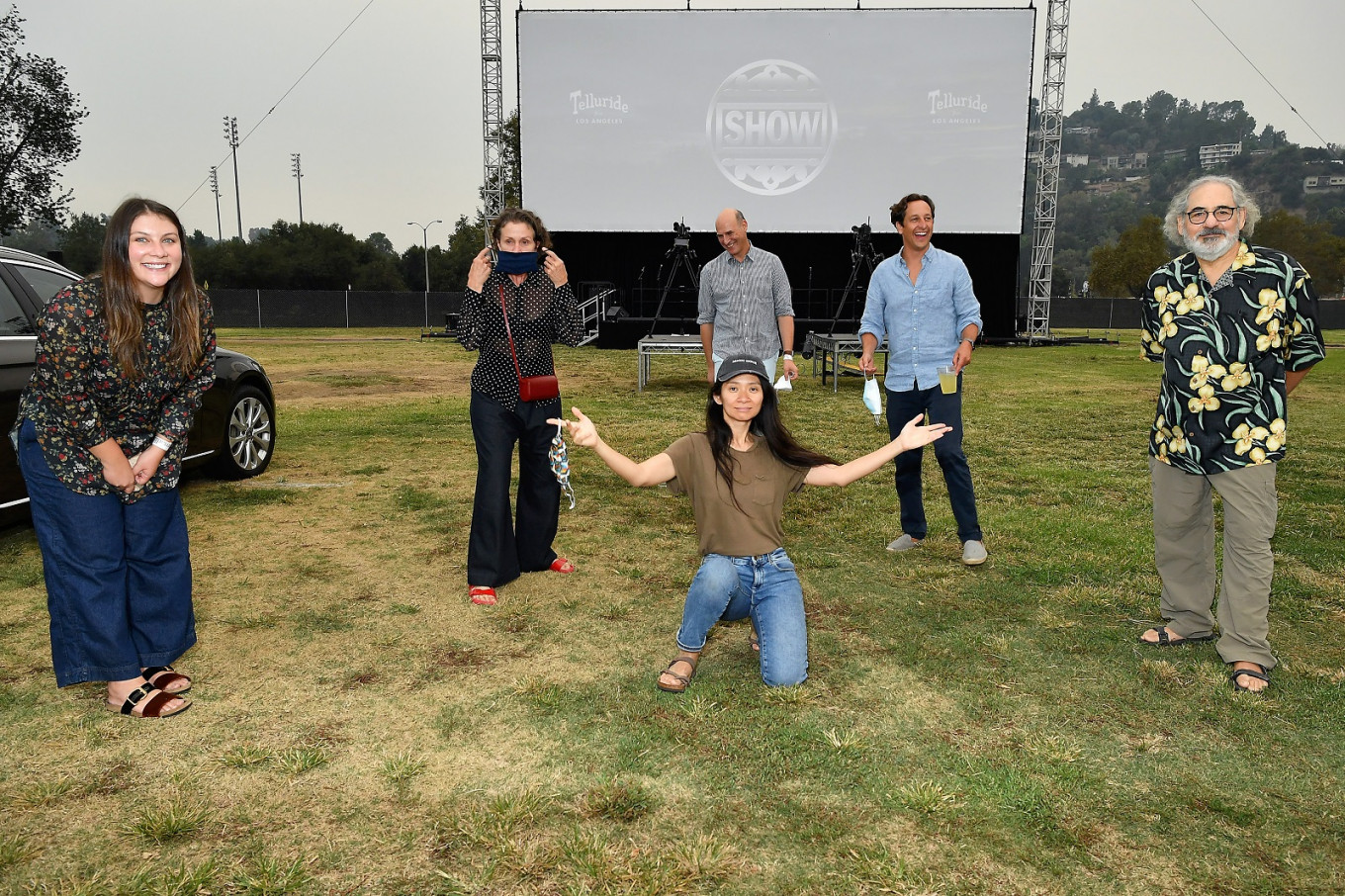
A pandemic wet dream escapist antidote in ever worst sense of the word, Nomadland and its current breathless avalanche of critic accolades could not be further from its sobering reality. Director Chloe Zhao seems to be exploiting free spirit fantasy - somehow traveling the Trump train in that regard making US socio-economic misery great again. 

Nomadland finds Frances McDormand impersonating a homeless elderly woman who embarks on a lone journey in her van across the barren western landscape, following the death of her husband and the shutting down of that mining region - the zip code vanishing as well. At first Fern's plight plays out as disturbing and heartbreaking, a reality progressively observed as this country sinks into an economic crisis counting joblessness, hunger and homelessness everywhere.

But as Nomadland progresses, Zhao's focus digresses into increasingly unrelated side trips - namely homelessness not only as choice, but rambler euphoria. Far less a massive hard times state of hopelessness than an adventure across state lines. And a fleshing out of Fern's increasingly unlikable personality as misanthropic, a rejection of family and deep relationships with an aversion to other than fleeting human contact on the road.

Meanwhile, no need apparently to responsibly include the alarming statistics on homeless female assaults, murders and rapes. And by defining homelessness here as mental or emotional in origin, the travesty continues, not only in maligning the homeless - who may very well have psychological issues though predominantly as a result of being homeless - but in sidestepping the economic causes and solutions to their predicaments.

 And to sum up, with Nomadland essentially featuring characters hugging and kissing their poverty like a great hyper-romaticized US adventure - including intermittent cheerful gigs at Amazon warehouse pit stops along the way to earn some spare change. Wonder if Amazon allowed filming there if criticism of their worker exploitation was totally off the table.

Oh wait, Zhao's reward for buttering up the critics with this middle class pandemic virtual escape romp - she has been pegged to helm Hollywood's latest Marvel superhero spree, The Eternals.

Prairie Miller
Host and Executive Producer, Arts Express
WBAI/Pacifica National Radio Network Affiliate Stations
Global Radio Network
WBAI Listen On Demand


Thursday, November 19, 2020

The Last Vermeer: Combo Classic Trickster, Cunning Subversive


** "In the colonies of yesteryear, we were the Nazis. We raped, we murdered, we took slaves - we even threw babies on to fires. And the statues of the men who led that, stand proudly in our public spaces." 

Guy Pearce is one of the most accomplished - and unheralded actors around, noted for his roles in Memento, LA Confidential and Brimstone. And now the Australian actor both astonishes and bewilders in The Last Vermeer,  inhabiting the psyche of the real life, ostentaciously evasive WWII Dutch artist and art forger Han van Meegeren. Who sold the classic painting in question to the Nazi occupiers - in exchange for art they looted from the national museums. Or did he. 

Simultaneously convicted, cursed and celebrated in his lifetime for trading classic artwork to the Nazis - while at the same time adored in Dutch popular culture by trading a forged Vermeer to them in exchange for authentic museum art they pillaged from the national museums,  the notorious figure symbolizes beyond his situation in this dramatic feature, the questionable US and European powers who today claim, or rather self-proclaim global moral authority. And continued demonizing and assault in that regard, against Third World countries they've targeted with genocide and exploitation, for centuries.

And which brings up key political questions masterfully encircling and fueling the narrative revisiting this relatively unknown figure elsewhere. Essentially, what is truth really, when it comes to victims and villains, who gets to define them whether courtrooms or the historical verdict - and all the gray areas in between.

The Last Vermeer may be the first candid, uncompromising dramatic interrogation probing what passes for truth or fabrication in the inevitably confounding aspects of human history. And swept along by the astonishing, deliriously elusive and mystifying Oscar-worthy performance of Guy Pearce - fueling a splendidly perverse, alternately shrewd and discerning vivacity to the notion of unreliable narrator, indeed. And, those eyebrows...

Prairie Miller

Friday, October 30, 2020

Wuhan Wuhan: Concern Not Cash For Care Triumphs Over The Pandemic


It goes without saying that documentary filmmakers with conviction step in as truth tellers where the media fear - or conspire - to tread. Such could not be more true, and timely, as a pressing and corrective screen statement than Yung Chang's Wuhan Wuhan. The Canadian director journeyed to Wuhan, the site of the first massive outbreak of the covid pandemic, to collaborate on this feature with Gong Cheng, a graduate of the People's Liberation Army Academy of Art, joining together their diverse international perspectives for this extraordinary venture.

Strikingly crafted as cinema verite, allowing the film's subjects to speak for themselves, Wuhan Wuhan proceeds into the city's pandemic stricken corridors to pursue a story with no predetermined ending - and more about crisis in progress than conclusion. Which deftly lends an element as well of dramatic suspense towards the unknown - which in hindsight has been victorious - a rare accomplishment in documentaries.

But of likewise astonishing note, is China's collective cultural contrast when it comes to health care. The sick simply walk into a hospital to receive treatment - no interrogations about acceptable insurance or paying for exorbitant procedures - which in this country leads many too fearful to seek critical help for the virus or any number of conditions, and instead hoping to get better at home but dying there instead. And with one patient casually announcing something never heard here in medical settings "I know the government cares about us."

Yet another surprising observation, is the sighting of psychologists, essential components of the medical teams making the rounds of the covid wards. And one inquiring of the patients - does anyone need therapy, maybe for anxiety or insomnia. Or just being sad. "You don't have to ask me. Everyone here needs therapy, including me."
 
Prairie Miller

Monday, October 19, 2020

Queen Of Comedy: All Joking Aside Compassionate Portrait Of Young Doomer Bloomer Comic


Raylene Harewood takes center stage literally and figuratively in All Joking Aside as Charlie, a glum young African American grocery clerk with standup aspirations to make people laugh, even if that's her own least accessible emotion off stage. More about fulfilling the comic dreams of her late father, Charlie inexplicably dares the reluctant washed up, once renowned standup barfly Bob (Brian Markinson) - who heckles her off the stage on her first less than impressive try - to mentor her with his shared gifts of the trade.

Equal parts satirical and sensitively crafted, All Joking Aside is a kind of contemporary updating of Shaw's Pygmalion - in this case boomer misery in collision with low wage millennial extreme dreams. That it works so well, may be a reflection of what's going down in the real world right now, as 'misery loves comedy' broken human beings struggle to mend and stay afloat in the present time. And drawing from the compelling premise that 'there are two types of people in the world - funny people and happy people.'
 
Less effective is director Shannon Kohli (Supergirl) conveying Charlie's creative transformation, opting instead for a reticent rather than raw blossoming on stage when it comes to mining race and gender comic irreverence. In other words, if the audience off screen is not as amused as the club crowd, an essential connection is missing. Also somewhat MIA is famed veteran Canadian standup performer, actor and poet Richard Lett, relegated here to an intermittent cameo as nurturing bartender in the background.
 
And likewise distracting, is a setting that claims to be New York City and a supposedly Bronx bred Charlie - but is actually blizzard drenched Canada. As with jokes that go nowhere without the element of funny, Big Apple patriots will pick up on the difference.
 
Prairie Miller
 
The True Adventures of Wolfboy: Animal Instincts Rule
 
A coming of age tale in rebellion against the grownup world, The True Adventures Of Wolfboy could have been more relevant than ever during this chaotic moment in time signaling either adult perplexity or destructive collusion concerning a broken planet the youth are inheriting from them - but it isn't. 
 
A missed opportunity for youth to traditionally try carving their own future as a better place by confronting and addressing that collapsing world in shambles politically, economically and ecologically, and with a perpetual pandemic in progress - this visually impressive, surreal fantastical outing harboring a cruel heart has all the trappings of an enticing confection, with a toxic list of ingredients attached.

The Wolfboy in question is Paul (Jaeden Martel) a glum thirteen year old bullied and ostracized as a result of a skin condition covering him head to toe in fur. Abandoned by a mother (Chloe Sevigny) unable to psychologically deal with a deformed child, and parented by helplessly frustrated single father and local garbageman Denny (Chris Messina), Paul runs away from home to find the mother he never knew. 

And stopping by to join the local circus in a bid to raise travel money, Paul is subjected by maniacal owner Mr. Silk (a wildly flamboyant John Turturro) to being caged as a freak public attraction on exhibit. Resentful when not immediately paid, Paul burns down the circus and then subsequently flees with a gun toting kid gang robbing their way across the country. 

For starters in this underage inmates taking over the asylum revelry, Paul sets fire to a carnival filled with physically deformed human beings like himself. Along with these subsequent plot ingredients counting in addition to arson - armed robbery, self-disfigurement and yet one more bad mother in those many movies. 
 
This incongruently giddy youth revenge fantasy ultimately on a journey going nowhere, seems more akin to John Carpenter's Village Of The Damned and Stephen King's Children of The Corn - and those kid takeover "beware the children" horror movies.
 
Prairie Miller

Wednesday, August 19, 2020

EMPEROR REVIEW


"He was a fugitive slave, who had made his escape from Charleston, South Carolina; a state from which a slave found it no easy matter to run away. But Shields Green was not one to shrink from hardships or dangers.

He was a man of few words, and his speech was singularly broken; but his courage and self-respect made him quite a dignified character. John Brown saw at once what "stuff" Green "was made of," and Green easily believed in Brown, and promised to go with him whenever he should be ready to move. Shields Green, one of the bravest of his soldiers..."
~ Frederick Douglass

A rebel slave uprising political action thriller, Emperor is based on the life of Shields Green, African royalty kidnapped and enslaved on a Southern plantation - who escaped and fought with John Brown at Harpers Ferry. And a longtime collaboration and labor of love with producer/filmmaker Reginald Hudlin - yet another greatest story never told in the annals of all too often buried courageous black history.

Emperor stars Dayo Okeniyi as Shields Green, Harry Lennix as Frederick Douglass, James Cromwell as John Brown, and Bruce Dern as a kind of Underground Railroad solo Greek chorus tying everything together narratively and ideologically. Likewise the bold and impressive collaboration of Iranian born writer/directer Mark Amin and Black Lightning/Sons of Anarchy co-writer Pat Charles.

Emperor, though released by chance during this Black Lives Matter moment in time, could not have been more timely and evocative. Along with immensely bracing Brechtian interludes of debate included as well - confronting essential ideological questions surrounding struggle - as expressed here by the characters Frederick Douglass, Shields Green, and John Brown. And Robert E. Lee - regarding in particular the hypocrisy enshrined in the Declaration Of Independence when it comes to who exactly is created equal.

And while the film delves into the numerous insurmountable tragic circumstances that filled Green's life, Amin's interest lies primarily elsewhere. Indeed, in focusing on the ingredients of legend - the journey and the struggle - imbued in the life of any extraordinary human being. And embellishing those heroic highlights as a future offscreen blueprint and path to hope, absolved of breathlessly captivating flourishes.

And like John Brown/Green's immortalized defeat, or Che in Bolivia, a film of courage according to Amin. Focused on earnestly paying tribute to "history filled with people who knowingly went to battle and fought causes - knowing they're risking everything including their lives."

Prairie Miller

Saturday, June 20, 2020

The Tobacconist: Freud, Fascism And Smokers Guide To Surviving History


Though primarily the story of one rural migrant young man's coming of age during the rise of Nazism in 1930s Vienna and Hitler's subsequent invasion of Austria, Franz (Simon Morze) and his traumatic transformation in The Tobacconist is somewhat, but should have been more substantially upstaged by a chance encounter and subsequent friendship with Sigmund Freud back then. Based on the adapted work of historical fiction by Austrian novelist Robert Seethaler, the details have yet to be sorted out as to what is factually true or poetic license of the author's imagination. But the subdued yet luminous portrayal of Freud by the late Bruno Ganz in one of his last films, should have been comparably afforded more attention as dramatic historical record.

Directed by Austrian filmmaker Nikolaus Leytner, the film begins with 19 year old Franz sent from the countryside by his financially struggling single mother after her lover dies, to help make ends meet by working as an apprentice for Vienna tobacco shop owner Otto - a former lover as well and a World War I veteran who has lost a leg in the war. Franz begins to pursue a friendship with the celebrated psychoanalyst Dr. Freud, who frequents the shop for his personal, ultimately deadly drug of choice, cigars. Meanwhile, Otto whose premises remain welcoming to Communists and Jews, is himself increasingly in danger of political persecution.

The relationship between the young man in search of the meaning of life during this increasingly chaotic and dangerous time, and the wise but intellectually elusive octogenarian, alternates with yet another elusive character - a flirtatious, mysterious Bohemian immigrant Anezka who sexually toys with the young man, while working nights as a scantily attired dancer at a cabaret initially mocking Hitler - then adulating him as the country falls under German occupation. Franz is desperate to learn from the older learned man about his irrepressible desire for this thankless woman, and the interpretation of his persistent related dreams bordering on nightmares - which are rendered visually in the movie with exquisitely crafted imagery.

On the other hand, Freud is more preoccupied with his own possible fate as a Jew, as those concerned about him urge his exile to London - which eventually transpires but is not depicted in the film. Nor disappointingly, is the arrest and interrogation by the Nazis of daughter Anna Freud, a distinguished historical figure in her own right, and the eventual murder of his three elderly sisters in the death camps. And as Freud appears to ponder and question the fate of his previously confident theories about human nature, under these horrifically unpredictable circumstances - yet another unfleshed out plot point seemingly crying out for dramatic development and context.

Freud would end his own life a year later in London, as an assisted suicide in the face of excruciating terminal cancer of the jaw. And though The Tobacconist deprives audiences psychologically (What would Freud say!) with its abbreviated options, moments as when the acclaimed psychoanalyst wearily succumbs to crashing on his own therapy couch out of historical exasperation - along with a final farewell to Bruno Ganz - are indelibly laced with a delicately conceived dark yet whimsical humor.
 
Prairie Miller

Friday, May 8, 2020

Intrigo: Seductive Saboteurs Shake Up Noir With Feminist Fatales


A kind of subversive noir in a provocative genre already just that, Intrigo injects further tantalizing unconventional flavor into what may be characterized as the birth of the feminist fatale. And within the intriguing multi-layered, already by definition seductively elusive context of actors playing actors on screen.

Adapted from the work of bestseller HÃ¥kan Nesser and directed by Nasser (The Girl Who Played with Fire), Intrigo moves back and forth through time as suddenly widowed Agnes (Carla Juri) is about to lose her palatial home to her elderly deceased spouse's two adult children in no way fond of Carla - who is perceived as a gold digger. The will enables the children to sell the home, and a distraught Agnes lacks the funds to buy it from them.

Mysteriously entering this progressively sinister scenario, is Henny  (Gemma Chan), an affluent housewife who has had close emotional ties to Agnes, when they were both aspiring young actresses. However ruthless competition for a role destroyed their relationship, and while both made seductive moves at the time on Peter (Jamie Sives.) the director casting the parts, Henny later married him. 

But now apparently shackled to an unfaithful husband, Henny contemplates murdering him. Though to assure that she not end up the suspect, the seething resentful woman searches for a hired killer. Which leads to an unethusiastic to say the least former friend and subsequent foe, Agnes. But Henny eventually convinces the conflicted Agnes to agree, by offering to provide the desperate woman enough cash to keep her home.

And with both harboring long festering hostility towards Peter as well as one another, Intrigo smoulders with subdued, progressively mounting tension as an exceedingly incendiary cliffhanger that might proceed in a multitude of unanticipated directions. But the dramatic destination that ultimately transpires, shakes up conventions especially regarding notions of female fury and retaliation, even for the subversive teaser expectations of noir.

Prairie Miller

Friday, March 6, 2020

Judy & Punch: Exquisite Me-To Menu Of Anti-Patriachal Retribution


Prior to violence in movies whether terrifying or comical, or even horror on screen, there was that post-Renaissance early incarnation, Punch And Judy. And those puppetry plays for adults and children alike, intended to summon audience laughter at the sight of pummeled and battered victims - with Judy spouse Punch heralded for his brutality. And ironically, a European tradition dating back to Ancient Greece, when audience pleasure, in particular sports events, proliferated as a mechanism to substitute for war. Though hardly as effective today, when it comes to football season.
 
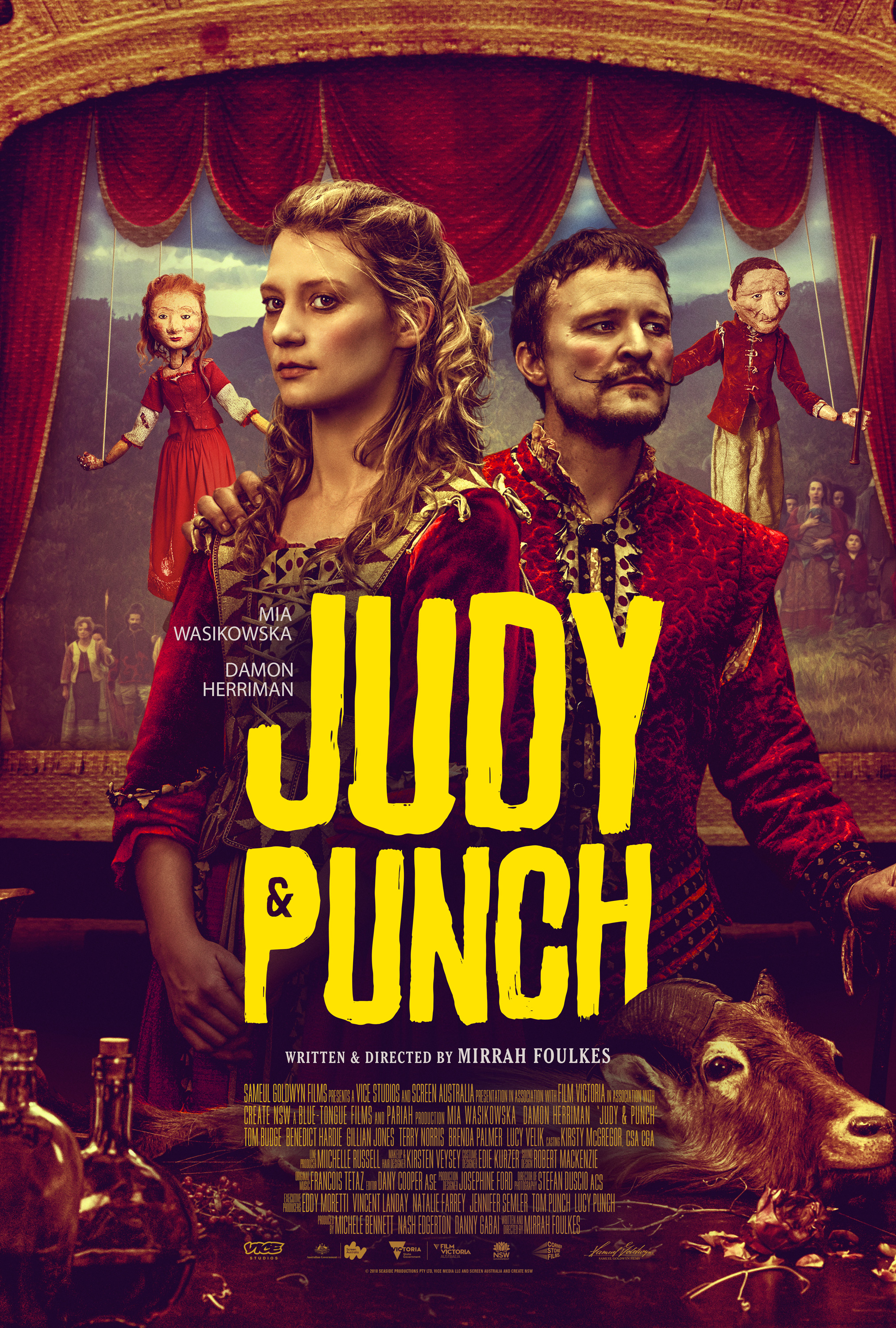
Set in the 17th century Welsh town of Seaside, writer/director Mirrah Foulkes' stylishly lyrical feminist fable Judy & Punch has much more on its mind to ideologically turn on its head than just the title.With both musical and socio-political surprise flourishes in the here and now popping up, Judy & Punch features a backward and brawling population of drunk when not depraved denizens. 

And, where sparse entertainment is provided at the local pub by the Punch & Judy Show. A collaborative effort of husband and wife puppeteers Mr. Punch (Damon Herriman) and Judy (Mia Wasikowska), the real brains behind the creation is Judy. While the brawn literally is her untalented other half, with egotistically frustrated, simmering tendencies by Mr. Punch, towards domestic violence.


Without delving further into the cruel and tragic events that ensue in this nevertheless invigorating and enchantingly told tale, the boldly irreverent anti-patriarchal parable critiques a me-too menu of historical atrocities that includes mass superstition, vigilante justice, the persecution and sacrifice of women as witches, domestic violence, a righteous uprising of designated ancient heretics, rebels and outcasts - and euphoric raw and real feminist flights of fantasy tying it up all nicely together. And a timely treat as well for March Women's History Month.

Prairie Miller

Monday, January 6, 2020

ARTS EXPRESS TOP TEN BEST LIST OF THE YEAR

Red Hot And Saucy - Served Up Here


Gloria Bell *Best Musical! Julianne Moore in a take no prisoners transformative middle age makeover moment of clarity from emotionally passive 'other woman' outcast to patriarchal payback uprising. And with lots of self-celebratory, breathlessly expressive emancipation in this somewhat feminist musical too.

Official Secrets *Best Female Action Hero! "My motive was to stop a war and save lives - Yes, I'd do it again." Yet another instance of filmmakers of courage and conviction stepping up where unfortunately and unlike Keira Knightley's anti-Iraq War real life rebel - politicians and the press (including critics) fear to tread. Which is the reason you likely never heard of this best female action hero of the year.

Cold Brook: 'Are you ready to be different?' - Part ghost tale, part Bartleby while at the same time a captivating slavery reparations fable, the film flirts with the supernatural even with its heart planted firmly in sobering class and race issues historically and now.

Dolemite Is My Name: With class, race and cultural divides up for satirical scrutiny, the entire explosive socio-political era that fed blaxploitation gets raw enlightenment on rewind. And with the ignited rebel instinct, lucid moment of the marginalized defining that subversive time.

In The Aisles: A metaphorical, muted lyrical elegy of unrelieved despair in the Kafkaesque corporate workplace catacombs of global capitalism, somewhere in the former GDR following German reunification - and the concurrent disappearance of a collective trucker brotherhood under socialism.

Joker: Fear of the masses - in a movie. Unlike say, Parasite's combo derisive mockery and apprehensive undercurrent of potential workingclass rebellion. Along with an erroneous official fear-mongering advisory that the portrayal of that anarchistic comic book villain would precipitate violence in America. But the Golden Lion top prize winner at the Venice Film Festival as more manifestation of a violence already grounded in US culture, and a reflection of simmering low wage police state millennial generation misery.

Pause: A vivid, near soliloquy, men distorting women and bypassing the hungering housewife soul. And relief for aging suppressed passions and frustrations do eventually break free for moments, but with only elusive windows of dramatic conjecture provided - as perhaps it should be.

Richard Jewell: 'Don't become an asshole, a little power can turn a person into a monster.' A real life unlikely designated hero in this emerging police state/corporate press collusion cautionary tale.

The Operative
: Essential filmmaking of conviction indeed, a dramatic denunciation of the Mossad against Iran, penned by a former Israeli intelligence officer. And a brave movie stepping in to confront the challenges of current political censure and censorship offscreen - where timid and cowardly or complicit governments and corporate media fear to tread.


The Public: A mix of eloquence and satire, in this homeless mass uprising takeover of one of the last remaining US public service and social program sanctuaries for bookworms and the homeless alike, the public library.

** Note: 7 out of 10 were mysteriously 'disappeared' for their socio-political content. The others are inexplicably Hollywood.

AND...Worst Movie Of The Year: Parasite: 'On est tous le parasite de quelqu'un' [We are all the parasites of someone] Though billed as a kind of South Korean anti-capitalism satire - this eat the rich outing when not eating its own at the bottom of the economic food chain, comes off more as an empty plate...A condescending, pessimistic portrayal of human nature, bereft of class consciousness or ideology.
 ~ Prairie Miller

Arts Express: Dare To Be Different Radio