Friday, March 6, 2020

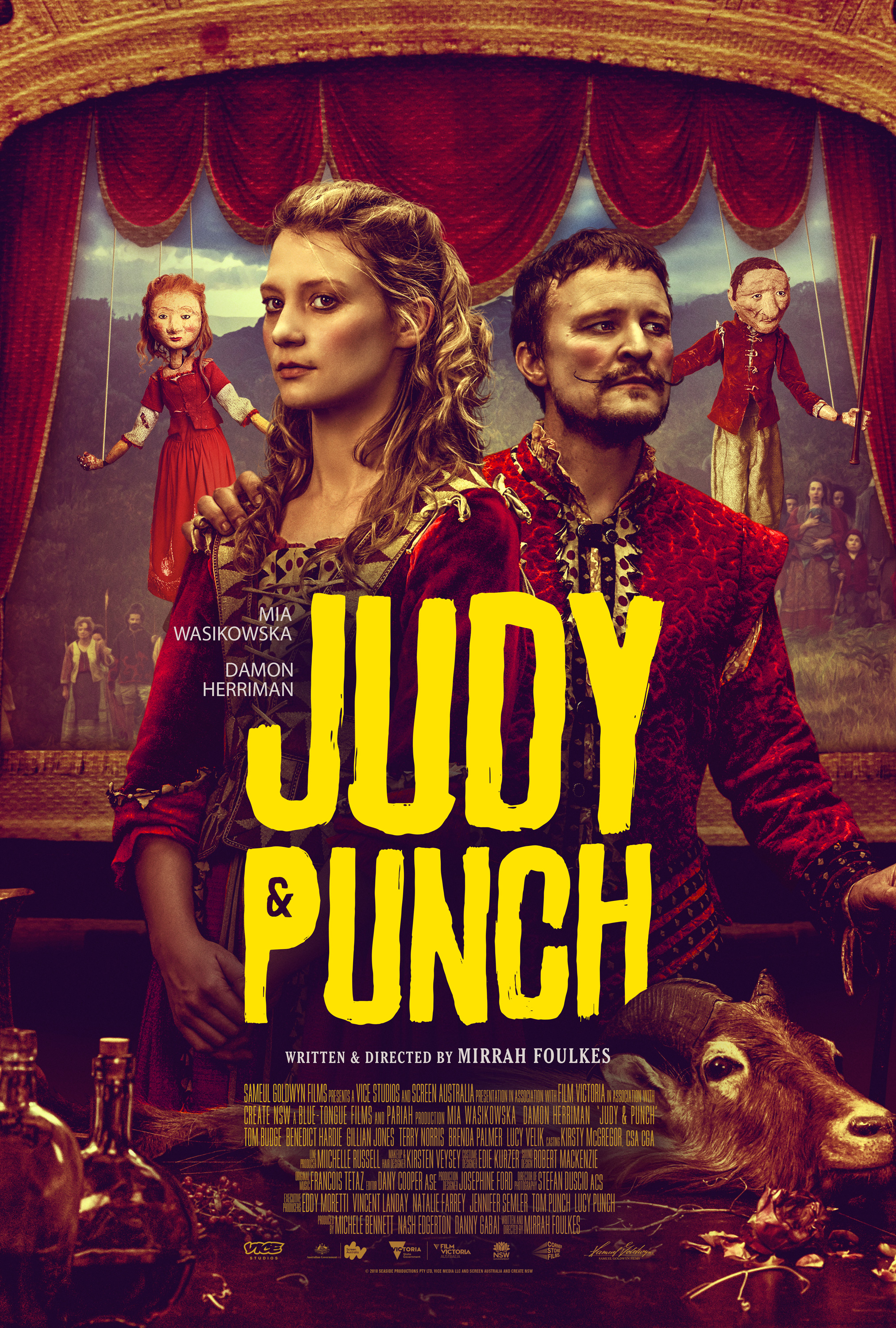
Judy & Punch: Exquisite Me-To Menu Of Anti-Patriachal Retribution


Prior to violence in movies whether terrifying or comical, or even horror on screen, there was that post-Renaissance early incarnation, Punch And Judy. And those puppetry plays for adults and children alike, intended to summon audience laughter at the sight of pummeled and battered victims - with Judy spouse Punch heralded for his brutality. And ironically, a European tradition dating back to Ancient Greece, when audience pleasure, in particular sports events, proliferated as a mechanism to substitute for war. Though hardly as effective today, when it comes to football season.
 
Set in the 17th century Welsh town of Seaside, writer/director Mirrah Foulkes' stylishly lyrical feminist fable Judy & Punch has much more on its mind to ideologically turn on its head than just the title.With both musical and socio-political surprise flourishes in the here and now popping up, Judy & Punch features a backward and brawling population of drunk when not depraved denizens. 

And, where sparse entertainment is provided at the local pub by the Punch & Judy Show. A collaborative effort of husband and wife puppeteers Mr. Punch (Damon Herriman) and Judy (Mia Wasikowska), the real brains behind the creation is Judy. While the brawn literally is her untalented other half, with egotistically frustrated, simmering tendencies by Mr. Punch, towards domestic violence.


Without delving further into the cruel and tragic events that ensue in this nevertheless invigorating and enchantingly told tale, the boldly irreverent anti-patriarchal parable critiques a me-too menu of historical atrocities that includes mass superstition, vigilante justice, the persecution and sacrifice of women as witches, domestic violence, a righteous uprising of designated ancient heretics, rebels and outcasts - and euphoric raw and real feminist flights of fantasy tying it up all nicely together. And a timely treat as well for March Women's History Month.

Prairie Miller

Monday, January 6, 2020

ARTS EXPRESS TOP TEN BEST LIST OF THE YEAR

Red Hot And Saucy - Served Up Here


Gloria Bell *Best Musical! Julianne Moore in a take no prisoners transformative middle age makeover moment of clarity from emotionally passive 'other woman' outcast to patriarchal payback uprising. And with lots of self-celebratory, breathlessly expressive emancipation in this somewhat feminist musical too.

Official Secrets *Best Female Action Hero! "My motive was to stop a war and save lives - Yes, I'd do it again." Yet another instance of filmmakers of courage and conviction stepping up where unfortunately and unlike Keira Knightley's anti-Iraq War real life rebel - politicians and the press (including critics) fear to tread. Which is the reason you likely never heard of this best female action hero of the year.

Cold Brook: 'Are you ready to be different?' - Part ghost tale, part Bartleby while at the same time a captivating slavery reparations fable, the film flirts with the supernatural even with its heart planted firmly in sobering class and race issues historically and now.

Dolemite Is My Name: With class, race and cultural divides up for satirical scrutiny, the entire explosive socio-political era that fed blaxploitation gets raw enlightenment on rewind. And with the ignited rebel instinct, lucid moment of the marginalized defining that subversive time.

In The Aisles: A metaphorical, muted lyrical elegy of unrelieved despair in the Kafkaesque corporate workplace catacombs of global capitalism, somewhere in the former GDR following German reunification - and the concurrent disappearance of a collective trucker brotherhood under socialism.

Joker: Fear of the masses - in a movie. Unlike say, Parasite's combo derisive mockery and apprehensive undercurrent of potential workingclass rebellion. Along with an erroneous official fear-mongering advisory that the portrayal of that anarchistic comic book villain would precipitate violence in America. But the Golden Lion top prize winner at the Venice Film Festival as more manifestation of a violence already grounded in US culture, and a reflection of simmering low wage police state millennial generation misery.

Pause: A vivid, near soliloquy, men distorting women and bypassing the hungering housewife soul. And relief for aging suppressed passions and frustrations do eventually break free for moments, but with only elusive windows of dramatic conjecture provided - as perhaps it should be.

Richard Jewell: 'Don't become an asshole, a little power can turn a person into a monster.' A real life unlikely designated hero in this emerging police state/corporate press collusion cautionary tale.

The Operative
: Essential filmmaking of conviction indeed, a dramatic denunciation of the Mossad against Iran, penned by a former Israeli intelligence officer. And a brave movie stepping in to confront the challenges of current political censure and censorship offscreen - where timid and cowardly or complicit governments and corporate media fear to tread.


The Public: A mix of eloquence and satire, in this homeless mass uprising takeover of one of the last remaining US public service and social program sanctuaries for bookworms and the homeless alike, the public library.

** Note: 7 out of 10 were mysteriously 'disappeared' for their socio-political content. The others are inexplicably Hollywood.

AND...Worst Movie Of The Year: Parasite: 'On est tous le parasite de quelqu'un' [We are all the parasites of someone] Though billed as a kind of South Korean anti-capitalism satire - this eat the rich outing when not eating its own at the bottom of the economic food chain, comes off more as an empty plate...A condescending, pessimistic portrayal of human nature, bereft of class consciousness or ideology.
 ~ Prairie Miller

Arts Express: Dare To Be Different Radio

Thursday, October 24, 2019

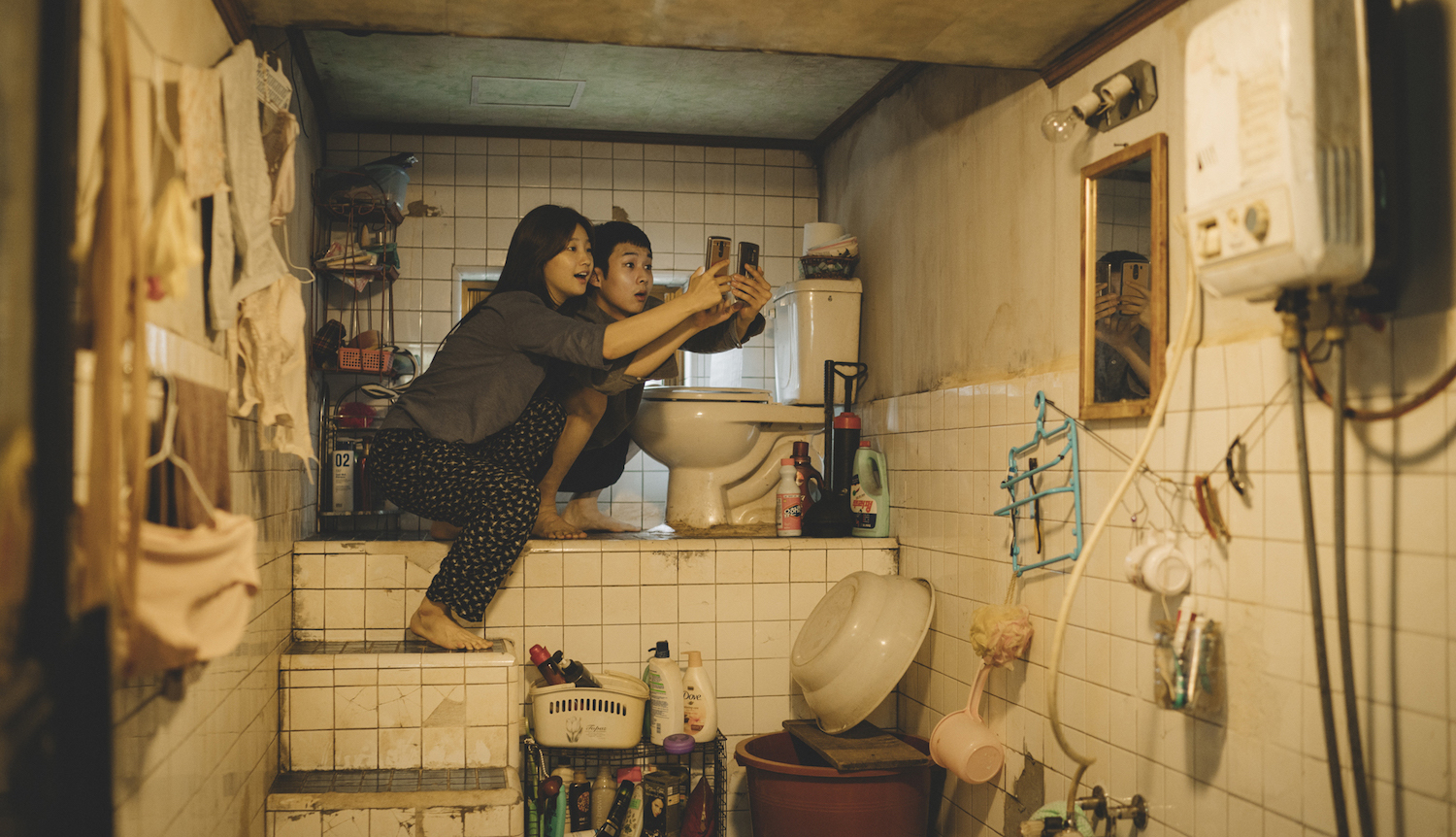
PARASITE: Deplorables, South Korea Style


Parasite: 'On est tous le parasite de quelqu'un'
       [We are all the parasites of someone]

Though billed as a kind of South Korean anti-capitalism satire - this eat the rich outing when not eating its own at the bottom of the economic food chain, comes off more as an empty plate...

A somewhat combo tale of two families and exceedingly twisted prince and the pauper dubious Seoul mates turned sour spree, Parasite plays out as the poverty stricken bottom feeder (literally basement dwellers) Kim clan conspires together to pull off an elaborate scheme posing as hired help at the home of the patrician Park family.

All goes well until part of the ploy involving maneuvers to get rid of the existing household workers backfires into over the top mayhem. And as a kind of chaotic both external and internal bloody class warfare ensues. Essentially creating for the amusement of the giddy bourgeois popcorn audience - both consumers and critics - a cinematic 21st century gladiator spree.

Director Bong Joon Ho (Snowpiercer, Okja) presents a condescending, pessimistic portrayal of human nature, bereft of class consciousness or ideology. And a working class whose sole motivation is to go to extremes, or aspiring to do so, to replace when not feeding off the economic class exploiting them - and in the process eliminating any potential workingclass competitors as well.

Parasite,  a feature of the NY Film Festival.

CITIZEN K: Don't Believe The Hype

Who is Russian oligarch Mikhail Khodorkovsky, and what is he doing as a dubious hero in this Alex Gibney documentary? And what does all this have to do with the Black October coup not collapse back in 1993, and Russia election meddling - no not that one. Rather, the Bill Clinton/CIA bromance with Boris Yeltsin that brought the counter-revolutionary candidate to power back then.

The ex-con turned Gibney martyr celebrated here as the once richest man in Russia after grabbing the wealth out of the people's coffers in that post-Soviet scam known as state vouchers, turns up in the film promoting his human rights organization out of London, Open Russia - an outfit created and funded by war criminal Henry Kissinger and UK robber baron banker Jacob Rothschild. Stay tuned...

Prairie Miller

Thursday, September 26, 2019

Dolemite Review; Judy: Disappointing Life, Disappointing Biopic

An unfortunately apt title for this essentially generic biopic plodding along with a tearjerker tabloid cinema soul, Judy could have been pretty much about any aspiring female entertainer's disappointed downfall into drugs, depression and despair. So the question regrettably presents itself throughout - which Judy? 

Seemingly sharing the spotlight unintentionally here is the glum, despondent inebriated protagonist played by Renee Zellweger with mostly unearned musical or star power here, and the dreary narrative during the course of which an older Judy Garland's limited emotional range veers from cranky, whining and irritable to simply unsympathetically annoying. And for those younger audiences unfamiliar with the once exceedingly popular performer around in the last century, and not those in attendance for a sentimental dose of nostalgia, there may simply be a baffled, clueless response to the melodramatic proceedings.

And no fault of Garland's, the stilted presentation focusing on her final years abruptly cut short while living in London, is directed by UK filmmaker Robert Goold - with just a few productions to his credit counting mostly Shakespeare and British royalty dramas. And with Goold's primary body of work as a theater director, the film can't escape his more familiar claustrophobic theatrical sensibility of a staged production. While in fact a biopic actually based on a stage play End Of The Rainbow, revisiting the tragic entertainer's final concerts before her life came to a sudden end, following a barbiturate overdose at the age of forty-seven in 1969. 

So unless the audience is comprised of the late legend's diehard fan base, one is more likely to feel locked in a room for two hours with a distressed sulking, gloomy diva - frustrating  and annoying as well to those around her. Judy Garland or not.

Dolemite Is My Name: Raw And Real Class, Race And Cultural Divide Satire

Like the second coming of blaxploitation, Craig Brewer's Dolemite Is My Name is not only a stinging subversive homage to the gritty, stylishly rude and sassy genre back then. But taking aim as well secondarily at the film world, that both badmouthed those outsider movies and embraced them for profit.

Eddie Murphy in a simultaneously hot wired and heartfelt reincarnation of real life seventies inner city standup comic turned stage performer and blaxploit film star Rudy Ray Moore, has much more on his mind than simply gags and gross-out. With class, race and cultural divides up for satirical scrutiny as well, the entire explosive socio-political era that fed blaxploitation gets raw enlightenment. Along with the ignited rebel instinct, lucid moment of the marginalized uttered by the man later dubbed by a younger generation as The Godfather Of Rap - When did my life become so small.

And, beginning with the unheralded, own uniquely colorful expressiveness to be gleaned from the lower depths of the outcasts in the streets, the homeless and alcoholic broken lives which Moore first observed, conveyed and infused into his own innovative humor and style. Then at the moment of obsession with determination to break the color line in movies in a big way, the outrageously outlandish, comedic confrontational clash internally, exposed in racial communication breakdown between Moore's street sensibility and the black bourgeoisie in the personage of the intellectual stage playwright he approaches to recruit to craft his screenplay. And the sensational sidebar humor to be had as if on different planets, between the social justice warrior's loftier infused political vision and Dolemite's hilariously emphatic earthy streetwise sensibility.

Nor are film critics given a pass either, a white corporate media chorus of bashers denouncing Dolemite's released movie. But with zero impact on the marginalized African-American population from which the press in profound alienation, is alerted to their own lack of influence - as the film goes on anyway to rake in 10 million dollars. 

Along with the rare sighting in practically any movie whatsoever, to be discovered in the resonating tender interlude of a deep friendship between a male and female (Murphy and Da'Vine Joy Randolph's Lady Reed). For a change not inevitably and predictably based on sex, but rather a soulful connection after Moore observes Lady Reed as a victim of domestic violence and draws her into his kooky fold. And which evolves into an eminently illuminated moment when Reed remarks with astonishing wonder - I've never seen anyone who looks like me in a movie.

Prairie Miller

Tuesday, June 18, 2019

Pause, Rosie Reviews

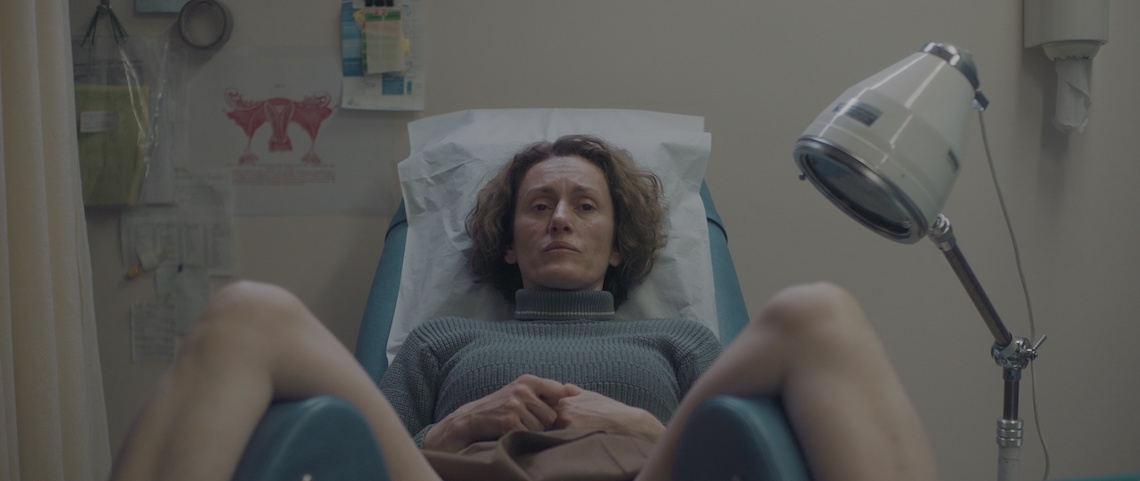
It's more than worth noting the litany of symptoms pertaining to the diagnosis of a female patient somewhere in Cyprus, that a seemingly indifferent doctor rattles off to the woman whose presence he barely acknowledges: "Loss of sexual desire, hot flashes, vaginal dryness, memory lapse or loss, mood disorders, fatigue, hair loss, weak nails, night sweats, sleep disorder - with or without night sweats, hypersensitivity, gum disease, mental confusion, lack of concentration, dizziness, urinary incontinence, bloating, weight gain, allergies, body odors, bleeding, depression, anxiety, arrhythmia, headaches, itchy skin, gastro-intestinal disorders, indigestion, stiff muscles, breast pain, joint pain, panic attacks, irregular periods, dry eyes, osteoporosis, emotionalism..."

 And then in abrupt conclusion - "You have nothing to worry about."

I kid you not.

So begins the solemn, somewhat of a living death sentence for obedient, melancholy middle aged housewife Elpida (Stella Fyrogeni), the reluctant, essentially invisible heroine of writer/director Tonia Mishiali’s Pause.  And in a reference to menopause, yet so much more - an affliction as not quite terminal existence, that has been on psychological pause for decades.

Returning home from the clinic to her abusive husband Costas (Andreas Vasileiou), as soulless and dismissive as the doctor, Elpida continues her endless routines of cooking and cleaning, the only grating interruptions the screeching of Costas' pet bird, and the horrid chewing noises when her boorish spouse gobbles up his meals. And with the kitchen her gloomy prison along with Costas denying her financial compensation of any sort save for occasional, essentially meager tips,  the only break in monotony is disturbed sleep interrupted by Costas' grotesque snoring -  or very occasional blunt, wordless sex on demand that is nothing less than domestic rape.

Relief for suppressed passions and frustrations do eventually break free for moments, but Mishiali and her protagonist provide only elusive windows of dramatic conjecture as perhaps it should be, reserving a respectful privacy of thought feeling, fantasy and reality, for a woman who in life has little substance of her own to possess and embrace. And ultimately the most vivid revelation - alerting filmmakers to necessary depictions on screen out there - that yes, being a housewife must be recognized an occupation too, liberated from exploitation and dehumanization.


ROSIE REVIEW


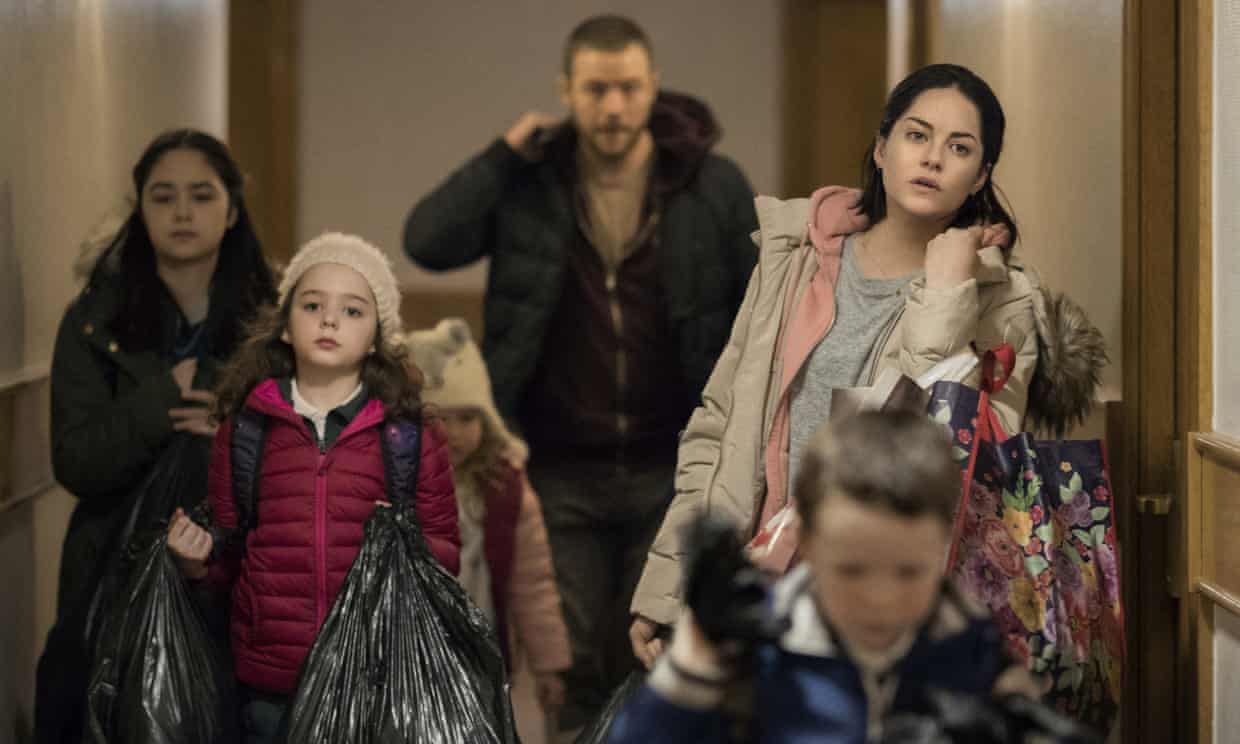
"We're not homeless, we're just lost." Which happens to be the strongest, yet ironic thematic statement in the film. As a destitute Dublin family with four young children finds themselves somehow living out of their car, when the home they were renting is sold by the owner. 

And what ensues in this harrowing and heartbreaking Paddy Breathnach directed dramatic feature, crafted as a 36 hour desperate quest for temporary housing, is a stinging visceral sense of relentless determination. And confronting an increasingly, seeming hopeless situation. 

This as Rosie (Sarah Greene) repeatedly telephones the same government provided emergency housing numbers for at least a room for the night to crowd in her family of six - and we're standing by alongside her as the troubled, progressively frazzled audience right there every step of the anxiety ridden way. While her spouse John Paul (Moe Dunford) toils as a low wage restaurant dishwasher - and increasingly irritating his boss for understandably erratic attendance. 

Then there is perhaps the most distressing scene, when Rosie is confronted by one emotionally troubled daughter's principal, demanding to know if the family is indeed living out of their car - which Rosie in humiliation denies -  and informing her that the other students are saying her children, with inadequate daily care at this time, 'smell.'

But getting back to the irony of the film itself, unlike Ken Loach's socio-political dramas pursuing similar themes, is a disturbing failure of courage on the part of the filmmakers - and by no means just this movie. 

So often, contemporary films about poverty and homelessness evade the real issues - government indifference under capitalism. With Rosie stubbornly, inexplicably refusing the help of family and friends who offer temporary housing solutions for the family.

And with Rosie, as with those other ethically objectionable and ideologically timid films, a blame the victim personal neurosis or even psychosis is substituted. That is, for principled protest against a cruel, inhumane and intolerable system.

Prairie Miller