Wednesday, August 19, 2020

EMPEROR REVIEW


"He was a fugitive slave, who had made his escape from Charleston, South Carolina; a state from which a slave found it no easy matter to run away. But Shields Green was not one to shrink from hardships or dangers.

He was a man of few words, and his speech was singularly broken; but his courage and self-respect made him quite a dignified character. John Brown saw at once what "stuff" Green "was made of," and Green easily believed in Brown, and promised to go with him whenever he should be ready to move. Shields Green, one of the bravest of his soldiers..."
~ Frederick Douglass

A rebel slave uprising political action thriller, Emperor is based on the life of Shields Green, African royalty kidnapped and enslaved on a Southern plantation - who escaped and fought with John Brown at Harpers Ferry. And a longtime collaboration and labor of love with producer/filmmaker Reginald Hudlin - yet another greatest story never told in the annals of all too often buried courageous black history.

Emperor stars Dayo Okeniyi as Shields Green, Harry Lennix as Frederick Douglass, James Cromwell as John Brown, and Bruce Dern as a kind of Underground Railroad solo Greek chorus tying everything together narratively and ideologically. Likewise the bold and impressive collaboration of Iranian born writer/directer Mark Amin and Black Lightning/Sons of Anarchy co-writer Pat Charles.

Emperor, though released by chance during this Black Lives Matter moment in time, could not have been more timely and evocative. Along with immensely bracing Brechtian interludes of debate included as well - confronting essential ideological questions surrounding struggle - as expressed here by the characters Frederick Douglass, Shields Green, and John Brown. And Robert E. Lee - regarding in particular the hypocrisy enshrined in the Declaration Of Independence when it comes to who exactly is created equal.

And while the film delves into the numerous insurmountable tragic circumstances that filled Green's life, Amin's interest lies primarily elsewhere. Indeed, in focusing on the ingredients of legend - the journey and the struggle - imbued in the life of any extraordinary human being. And embellishing those heroic highlights as a future offscreen blueprint and path to hope, absolved of breathlessly captivating flourishes.

And like John Brown/Green's immortalized defeat, or Che in Bolivia, a film of courage according to Amin. Focused on earnestly paying tribute to "history filled with people who knowingly went to battle and fought causes - knowing they're risking everything including their lives."

Prairie Miller

Saturday, June 20, 2020

The Tobacconist: Freud, Fascism And Smokers Guide To Surviving History


Though primarily the story of one rural migrant young man's coming of age during the rise of Nazism in 1930s Vienna and Hitler's subsequent invasion of Austria, Franz (Simon Morze) and his traumatic transformation in The Tobacconist is somewhat, but should have been more substantially upstaged by a chance encounter and subsequent friendship with Sigmund Freud back then. Based on the adapted work of historical fiction by Austrian novelist Robert Seethaler, the details have yet to be sorted out as to what is factually true or poetic license of the author's imagination. But the subdued yet luminous portrayal of Freud by the late Bruno Ganz in one of his last films, should have been comparably afforded more attention as dramatic historical record.

Directed by Austrian filmmaker Nikolaus Leytner, the film begins with 19 year old Franz sent from the countryside by his financially struggling single mother after her lover dies, to help make ends meet by working as an apprentice for Vienna tobacco shop owner Otto - a former lover as well and a World War I veteran who has lost a leg in the war. Franz begins to pursue a friendship with the celebrated psychoanalyst Dr. Freud, who frequents the shop for his personal, ultimately deadly drug of choice, cigars. Meanwhile, Otto whose premises remain welcoming to Communists and Jews, is himself increasingly in danger of political persecution.

The relationship between the young man in search of the meaning of life during this increasingly chaotic and dangerous time, and the wise but intellectually elusive octogenarian, alternates with yet another elusive character - a flirtatious, mysterious Bohemian immigrant Anezka who sexually toys with the young man, while working nights as a scantily attired dancer at a cabaret initially mocking Hitler - then adulating him as the country falls under German occupation. Franz is desperate to learn from the older learned man about his irrepressible desire for this thankless woman, and the interpretation of his persistent related dreams bordering on nightmares - which are rendered visually in the movie with exquisitely crafted imagery.

On the other hand, Freud is more preoccupied with his own possible fate as a Jew, as those concerned about him urge his exile to London - which eventually transpires but is not depicted in the film. Nor disappointingly, is the arrest and interrogation by the Nazis of daughter Anna Freud, a distinguished historical figure in her own right, and the eventual murder of his three elderly sisters in the death camps. And as Freud appears to ponder and question the fate of his previously confident theories about human nature, under these horrifically unpredictable circumstances - yet another unfleshed out plot point seemingly crying out for dramatic development and context.

Freud would end his own life a year later in London, as an assisted suicide in the face of excruciating terminal cancer of the jaw. And though The Tobacconist deprives audiences psychologically (What would Freud say!) with its abbreviated options, moments as when the acclaimed psychoanalyst wearily succumbs to crashing on his own therapy couch out of historical exasperation - along with a final farewell to Bruno Ganz - are indelibly laced with a delicately conceived dark yet whimsical humor.
 
Prairie Miller

Friday, May 8, 2020

Intrigo: Seductive Saboteurs Shake Up Noir With Feminist Fatales


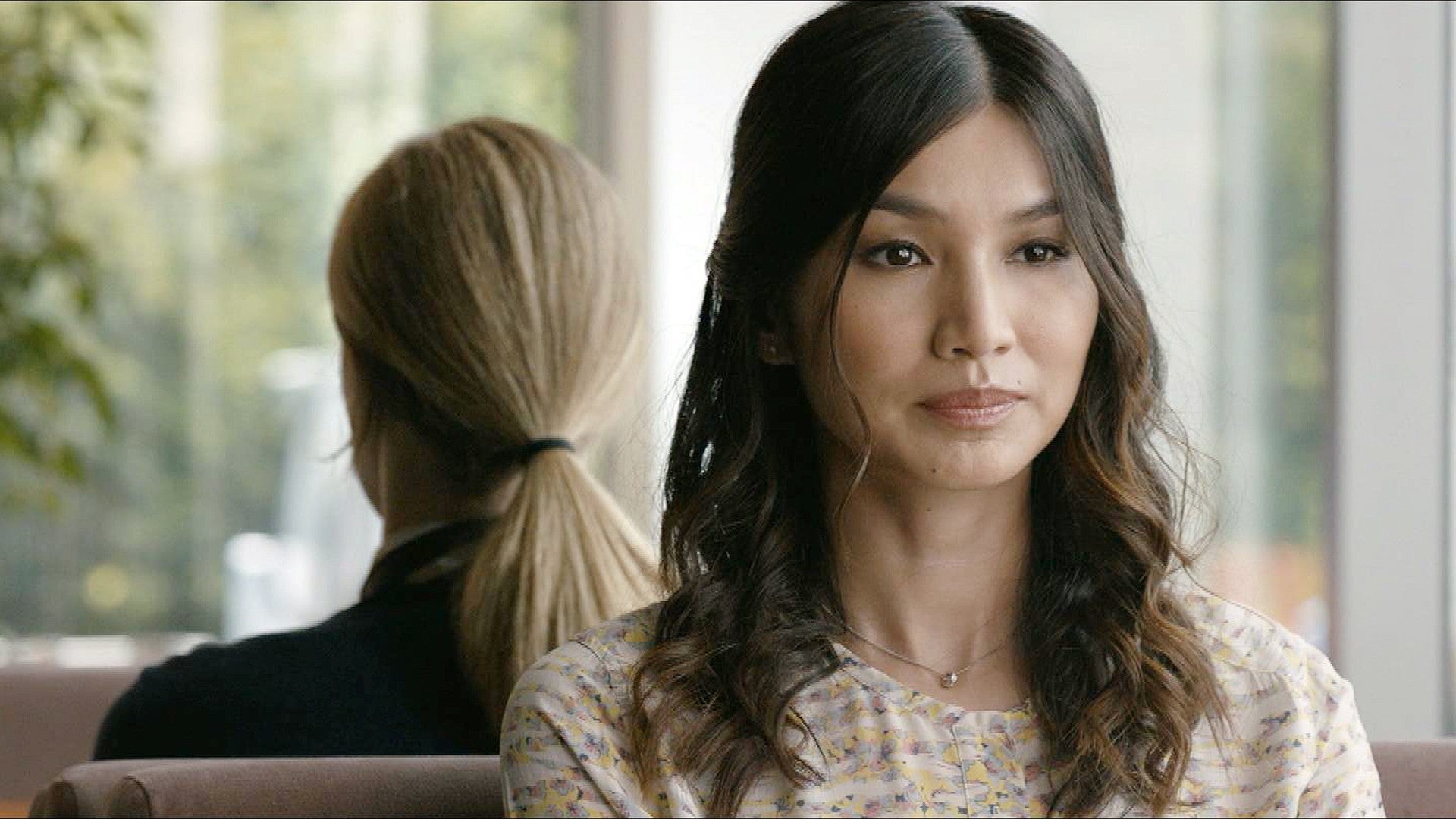
A kind of subversive noir in a provocative genre already just that, Intrigo injects further tantalizing unconventional flavor into what may be characterized as the birth of the feminist fatale. And within the intriguing multi-layered, already by definition seductively elusive context of actors playing actors on screen.

Adapted from the work of bestseller HÃ¥kan Nesser and directed by Nasser (The Girl Who Played with Fire), Intrigo moves back and forth through time as suddenly widowed Agnes (Carla Juri) is about to lose her palatial home to her elderly deceased spouse's two adult children in no way fond of Carla - who is perceived as a gold digger. The will enables the children to sell the home, and a distraught Agnes lacks the funds to buy it from them.

Mysteriously entering this progressively sinister scenario, is Henny  (Gemma Chan), an affluent housewife who has had close emotional ties to Agnes, when they were both aspiring young actresses. However ruthless competition for a role destroyed their relationship, and while both made seductive moves at the time on Peter (Jamie Sives.) the director casting the parts, Henny later married him. 

But now apparently shackled to an unfaithful husband, Henny contemplates murdering him. Though to assure that she not end up the suspect, the seething resentful woman searches for a hired killer. Which leads to an unethusiastic to say the least former friend and subsequent foe, Agnes. But Henny eventually convinces the conflicted Agnes to agree, by offering to provide the desperate woman enough cash to keep her home.

And with both harboring long festering hostility towards Peter as well as one another, Intrigo smoulders with subdued, progressively mounting tension as an exceedingly incendiary cliffhanger that might proceed in a multitude of unanticipated directions. But the dramatic destination that ultimately transpires, shakes up conventions especially regarding notions of female fury and retaliation, even for the subversive teaser expectations of noir.

Prairie Miller

Friday, March 6, 2020

Judy & Punch: Exquisite Me-To Menu Of Anti-Patriachal Retribution


Prior to violence in movies whether terrifying or comical, or even horror on screen, there was that post-Renaissance early incarnation, Punch And Judy. And those puppetry plays for adults and children alike, intended to summon audience laughter at the sight of pummeled and battered victims - with Judy spouse Punch heralded for his brutality. And ironically, a European tradition dating back to Ancient Greece, when audience pleasure, in particular sports events, proliferated as a mechanism to substitute for war. Though hardly as effective today, when it comes to football season.
 
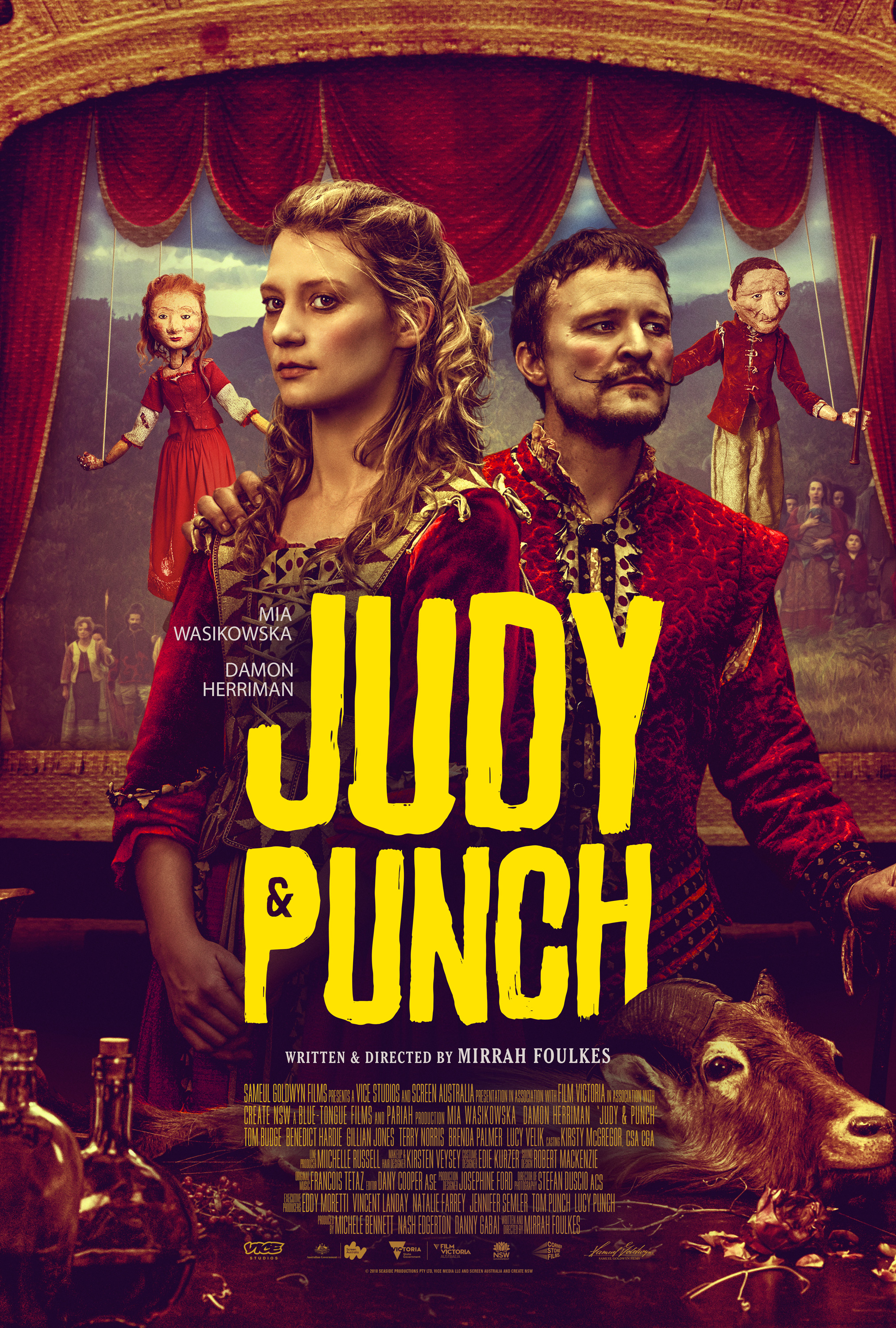
Set in the 17th century Welsh town of Seaside, writer/director Mirrah Foulkes' stylishly lyrical feminist fable Judy & Punch has much more on its mind to ideologically turn on its head than just the title.With both musical and socio-political surprise flourishes in the here and now popping up, Judy & Punch features a backward and brawling population of drunk when not depraved denizens. 

And, where sparse entertainment is provided at the local pub by the Punch & Judy Show. A collaborative effort of husband and wife puppeteers Mr. Punch (Damon Herriman) and Judy (Mia Wasikowska), the real brains behind the creation is Judy. While the brawn literally is her untalented other half, with egotistically frustrated, simmering tendencies by Mr. Punch, towards domestic violence.


Without delving further into the cruel and tragic events that ensue in this nevertheless invigorating and enchantingly told tale, the boldly irreverent anti-patriarchal parable critiques a me-too menu of historical atrocities that includes mass superstition, vigilante justice, the persecution and sacrifice of women as witches, domestic violence, a righteous uprising of designated ancient heretics, rebels and outcasts - and euphoric raw and real feminist flights of fantasy tying it up all nicely together. And a timely treat as well for March Women's History Month.

Prairie Miller

Monday, January 6, 2020

ARTS EXPRESS TOP TEN BEST LIST OF THE YEAR

Red Hot And Saucy - Served Up Here


Gloria Bell *Best Musical! Julianne Moore in a take no prisoners transformative middle age makeover moment of clarity from emotionally passive 'other woman' outcast to patriarchal payback uprising. And with lots of self-celebratory, breathlessly expressive emancipation in this somewhat feminist musical too.

Official Secrets *Best Female Action Hero! "My motive was to stop a war and save lives - Yes, I'd do it again." Yet another instance of filmmakers of courage and conviction stepping up where unfortunately and unlike Keira Knightley's anti-Iraq War real life rebel - politicians and the press (including critics) fear to tread. Which is the reason you likely never heard of this best female action hero of the year.

Cold Brook: 'Are you ready to be different?' - Part ghost tale, part Bartleby while at the same time a captivating slavery reparations fable, the film flirts with the supernatural even with its heart planted firmly in sobering class and race issues historically and now.

Dolemite Is My Name: With class, race and cultural divides up for satirical scrutiny, the entire explosive socio-political era that fed blaxploitation gets raw enlightenment on rewind. And with the ignited rebel instinct, lucid moment of the marginalized defining that subversive time.

In The Aisles: A metaphorical, muted lyrical elegy of unrelieved despair in the Kafkaesque corporate workplace catacombs of global capitalism, somewhere in the former GDR following German reunification - and the concurrent disappearance of a collective trucker brotherhood under socialism.

Joker: Fear of the masses - in a movie. Unlike say, Parasite's combo derisive mockery and apprehensive undercurrent of potential workingclass rebellion. Along with an erroneous official fear-mongering advisory that the portrayal of that anarchistic comic book villain would precipitate violence in America. But the Golden Lion top prize winner at the Venice Film Festival as more manifestation of a violence already grounded in US culture, and a reflection of simmering low wage police state millennial generation misery.

Pause: A vivid, near soliloquy, men distorting women and bypassing the hungering housewife soul. And relief for aging suppressed passions and frustrations do eventually break free for moments, but with only elusive windows of dramatic conjecture provided - as perhaps it should be.

Richard Jewell: 'Don't become an asshole, a little power can turn a person into a monster.' A real life unlikely designated hero in this emerging police state/corporate press collusion cautionary tale.

The Operative
: Essential filmmaking of conviction indeed, a dramatic denunciation of the Mossad against Iran, penned by a former Israeli intelligence officer. And a brave movie stepping in to confront the challenges of current political censure and censorship offscreen - where timid and cowardly or complicit governments and corporate media fear to tread.


The Public: A mix of eloquence and satire, in this homeless mass uprising takeover of one of the last remaining US public service and social program sanctuaries for bookworms and the homeless alike, the public library.

** Note: 7 out of 10 were mysteriously 'disappeared' for their socio-political content. The others are inexplicably Hollywood.

AND...Worst Movie Of The Year: Parasite: 'On est tous le parasite de quelqu'un' [We are all the parasites of someone] Though billed as a kind of South Korean anti-capitalism satire - this eat the rich outing when not eating its own at the bottom of the economic food chain, comes off more as an empty plate...A condescending, pessimistic portrayal of human nature, bereft of class consciousness or ideology.
 ~ Prairie Miller

Arts Express: Dare To Be Different Radio